
Tooth extraction is one of the most common procedures that dentists perform on patients. However, the actions that one takes after the procedure are very crucial in facilitating a quick and comfortable recovery. The procedure could be an extraction or even a surgical procedure. If one has visited one of the dental clinics near San Antonio, Texas, it is important to understand what one should avoid after the procedure.
This guide will highlight some of the things that one should avoid after undergoing the procedure.
Why Post-Extraction Care Matters
Following a tooth extraction, your body creates a blood clot at the site where the tooth was extracted. The clot protects the nerves and bone, facilitating your recovery. It is, therefore, crucial to avoid anything that may interfere with your recovery process.
The benefits of post-extraction care include:
- Minimizing your discomfort and swelling
- Preventing infection
- Ensuring faster recovery
- Preventing conditions like dry socket
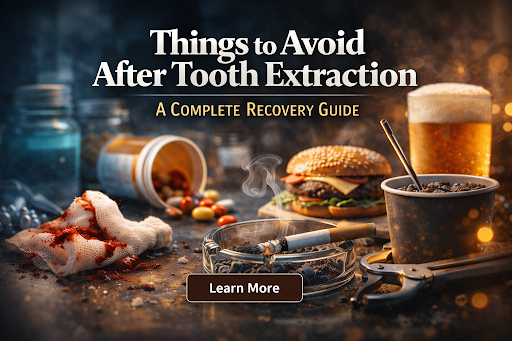
Avoid Smoking or Using Tobacco
One of the things you should avoid after a tooth extraction is smoking or using tobacco products. Smoking can cause you to develop a dry socket, a condition where your nerves and bones are exposed. This occurs because smoking causes suction, which can interfere with your recovery process.
Smoking contains chemicals that can affect your recovery process. It is, therefore, advisable to avoid smoking for at least 48-72 hours. However, it is advisable to avoid it for a longer duration for optimal recovery.
Don’t Use Straws
Using straws can be problematic. Sucking through straws causes suction in your mouth, and this may affect your healing process. This is one of the main causes of dry sockets.
Instead of using straws, you can:
- Drink directly from a glass
- Take small sips
- Avoid sucking through straws
Avoid Hot and Spicy Foods
Hot and spicy food is something that may affect you after the teeth have been extracted. Your mouth is very sensitive after the teeth have been extracted, and hot food may cause irritation in the mouth.
You can eat:
- Lukewarm or cool food
- Soft food like yogurt, mashed potatoes, or smoothies (without straws)
- Mild food that won’t irritate your mouth
It is recommended that you avoid spicy food, hot drinks, and crunchy food until your dentist tells you that everything is fine.
Don’t Touch the Extraction Site
It is natural to feel uncomfortable and even want to touch the area with your tongue or your fingers. It is, however, not recommended to touch the area where the extraction was done.
Avoid:
- Poking your tongue at the site
- Touching it with your fingers
- Checking it repeatedly
Let your mouth heal on its own without interference.
Avoid Vigorous Rinsing or Spitting
It is always recommended that one ensure that the mouth is clean, although one should avoid vigorously rinsing the mouth or spitting hard.
For the first 24 hours:
- Avoid rinsing your mouth completely
After 24 hours:
- Use saltwater for rinsing your mouth
- Let it fall out of your mouth instead of spitting it out
Patients who seek dental care at a dental clinic near San Antonio, Texas, are often advised to follow this simple step to prevent unnecessary complications.
Skip Intense Physical Activity
Intense physical activity or exercise can result in increased blood pressure, and this might even lead to bleeding from the extraction site. This might result in delayed healing and a painful experience.
For 24 to 48 hours, avoid:
- Avoid gymming or exercise
- Avoid running or lifting
- Rest and give your body time to heal
You can engage in light physical activities, but try to avoid activities that might strain your body.
Avoid Hard, Crunchy, or Sticky Foods
You should give your mouth time to heal, and hard, crunchy, or sticky foods might interfere with your recovery process. Hard foods might damage your healing site, and sticky foods might get lodged in your socket.
Avoid:
- Chips, nuts, and popcorn
- Chewing gum or sticky candies
- Hard breads or raw vegetables
Eat soft foods, such as those that do not require much effort to chew.
Don’t Ignore Pain or Unusual Symptoms
It is normal to feel some pain after an extraction, but if the pain is getting worse, you need to take action.
Watch out for:
- Severe pain after a few days
- Swelling that does not subside
- Bad taste and smell in the mouth
- Fever or signs of infection
In case you notice any of the above, contact your dentist immediately to avoid further complications.
Avoid Skipping Medications and Instructions
Your dentist may give you some medications, especially if you have an extraction. You need to take the medications as prescribed by the dentist.
Make sure to:
- Take the medications as prescribed
- Follow the instructions given
- Attend follow-up appointments if scheduled
It is important to be consistent in order to have an easy recovery process.
Be Careful with Oral Hygiene
It is important to brush your teeth, but you need to be careful around the affected area.
Do:
- Brush your teeth carefully
- Avoid the extraction area for the first day
- Resume gentle cleaning after 24 hours
Don’t:
- Use harsh mouthwashes
- Brush the area vigorously
Good oral hygiene can go a long way in preventing infections while the area heals.
Healing Smart for Long-Term Oral Health
The healing process after tooth extraction is not a complicated one, although one has to ensure that the healing process is done the right way. This ensures that the healing process is smooth, hence reducing the risks that may occur if one does not take the right measures.
If you are seeking guidance regarding the aftercare process, a dental clinic near San Antonio, Texas, can help you get the guidance you need. Moreover, choosing the right experts, such as SA Family Dentist, ensures that you get the guidance you need from the beginning to the end.
For those searching online, words such as tooth extraction recovery tips, how to prevent dry socket, tooth extraction aftercare, emergency dental care San Antonio, and affordable family dentistry services are just a few examples of how the need for proper aftercare and guidance can mean all the difference in the world when it comes to maintaining your oral hygiene.