
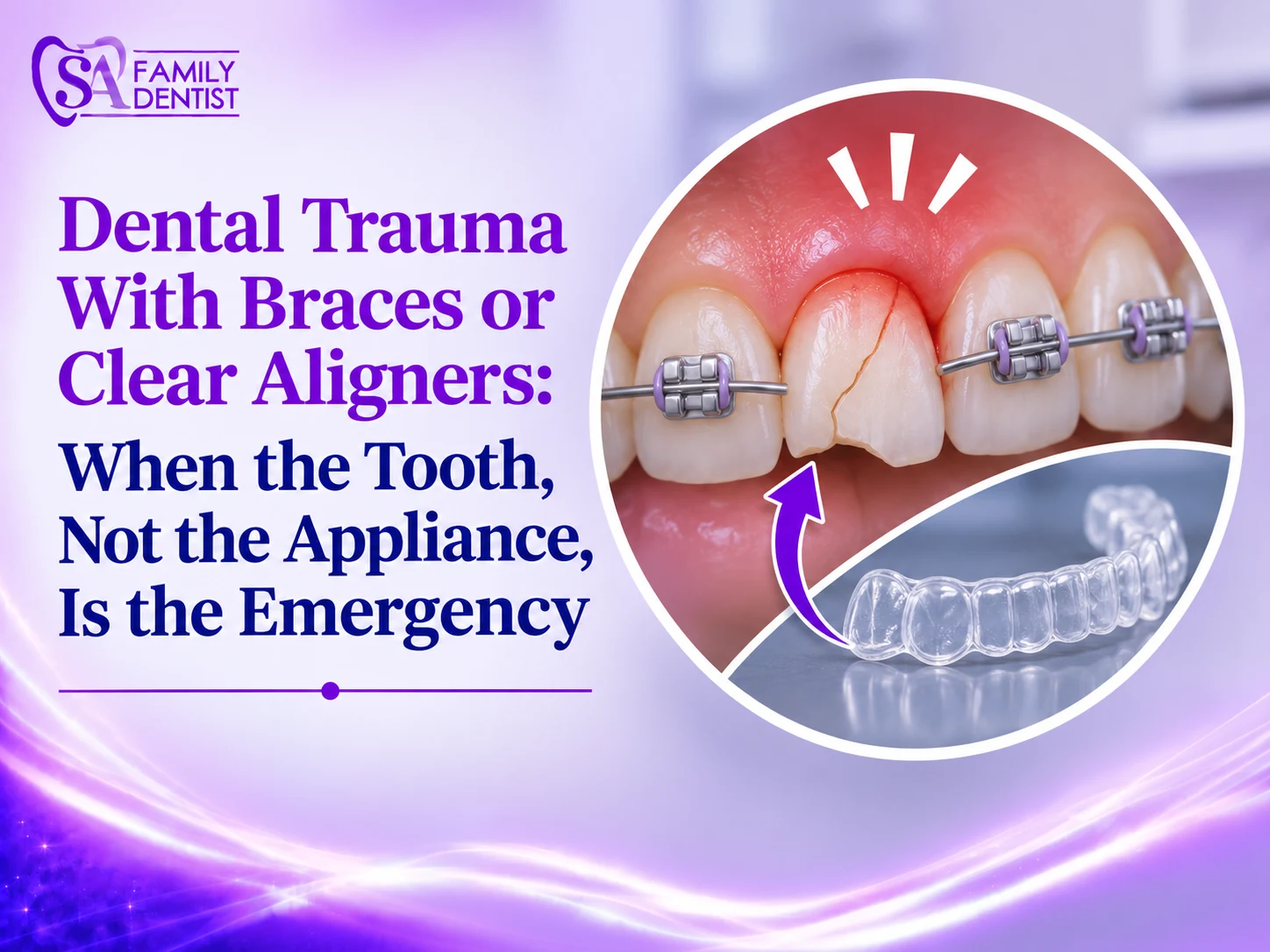
A basketball hits your teenager’s mouth during practice. Their braces look intact, but one front tooth feels loose. Or perhaps you fall while wearing clear aligners and notice blood around a tooth, even though the aligner tray appears undamaged.
In both situations, the appliance may attract your attention first. However, the more serious concern could be an injury to the tooth or its supporting tissues.
Dental trauma during orthodontic treatment requires careful assessment because damage is not always immediately visible. Knowing which symptoms demand urgent attention can help protect your teeth and prevent avoidable delays.
If an accident causes significant tooth pain, movement or bleeding, contacting an emergency dentist in San Antonio should take priority over checking whether your orthodontic appliance needs adjustment.
The Appliance Looks Fine. Could the Tooth Still Be Injured?
Yes. Braces and clear aligners are designed to guide tooth movement, not provide complete protection against traumatic injuries.
A sudden impact can affect the tooth, periodontal ligament, surrounding bone or gum tissue without visibly damaging the appliance.
For example, a tooth may remain in position after an accident but develop inflammation or damage within its supporting structures.
Possible injuries include:
- Tooth fractures: Cracks or broken sections affecting enamel, dentine or deeper tissues.
- Tooth displacement: Movement away from the tooth’s normal position.
- Root injuries: Damage beneath the gumline that may not be visible.
- Periodontal ligament injuries: Trauma affecting the tissues supporting the tooth.
- Soft tissue injuries: Cuts or bruising involving the lips, cheeks and gums.
A professional examination, sometimes supported by dental imaging, helps determine the extent of the injury.
Braces Versus Clear Aligners: Different Problems After an Impact
Although both appliances support orthodontic treatment, accidents can affect them differently.
When You Are Wearing Fixed Braces
Metal brackets and wires may become bent, loosened or displaced following an impact.
A broken wire can irritate the cheek, while a detached bracket may create discomfort.
However, a loose tooth or suspected fracture deserves more immediate attention than a damaged bracket.
Avoid pulling on wires or attempting to reposition a displaced tooth yourself.
When You Are Wearing Clear Aligners
Clear aligners may crack, become distorted or stop fitting properly after an injury.
A tray that suddenly feels unusually tight could indicate swelling or a change in tooth position.
Do not force a poorly fitting aligner onto injured teeth.
Remove it carefully if possible and seek professional advice before resuming wear.
How Can You Tell Whether the Tooth Needs Urgent Care?
The following symptoms deserve particular attention after an impact.
A tooth has moved: A tooth that appears pushed backwards, forwards or sideways needs urgent assessment.
The tooth feels unusually loose: Movement beyond normal orthodontic mobility may indicate trauma to supporting tissues.
Pain occurs when biting: This could suggest a fracture, ligament injury or displacement.
Bleeding develops around the tooth: Persistent bleeding may indicate gum or supporting tissue damage.
A tooth becomes darker: Discolouration following trauma can sometimes indicate changes within the pulp and requires evaluation.
Not every injury produces immediate pain. Symptoms may emerge hours or days later.
When these changes occur, an emergency dentist in San Antonio can assess the affected tooth and determine whether urgent treatment is necessary.
What Should You Do Immediately After the Accident?
Your response should focus on preventing additional injury.
- Check for serious trauma. Difficulty breathing, uncontrolled bleeding or suspected head injuries require emergency medical attention.
- Rinse gently. Use clean water to remove loose debris without disturbing injured teeth.
- Control minor bleeding. Apply gentle pressure using clean gauze.
- Use a cold compress. Place it against the outside of the face to help manage swelling.
- Avoid chewing on injured teeth. Choose soft foods until professional assessment.
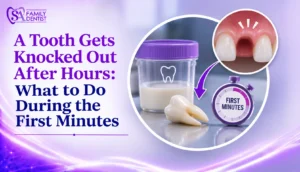
If a permanent tooth has been completely knocked out, immediate dental care is essential. Handle it by the crown, not the root, and seek guidance on safe reinsertion or storage in milk.
Never reinsert a knocked-out baby tooth.
Why Orthodontic Treatment May Need to Pause
After dental trauma, the priority is allowing injured tissues to recover.
Continuing orthodontic forces on a damaged tooth without assessment could complicate healing.
Depending on the injury, your dental team may recommend temporarily adjusting or pausing tooth movement.
The duration depends on the severity of trauma, tooth stability and clinical findings.
Importantly, a temporary interruption does not necessarily mean abandoning orthodontic treatment.
Your dentist and orthodontic provider can coordinate appropriate follow-up care.
What About a Broken Bracket Without Tooth Pain?
A loose bracket or irritating wire may require an orthodontic appointment without necessarily constituting a dental emergency.
However, sharp components causing significant soft tissue injury, or loose parts presenting a choking risk, require prompt attention.
If the appliance is damaged but the teeth appear unaffected, contact your orthodontic provider for instructions.
Never assume that an intact appliance means the underlying teeth are unharmed.
Dental Injury Assessment at SA Family Dentist
An accident during orthodontic treatment can leave patients uncertain about whether to contact their dentist or orthodontic provider first.
At SA Family Dentist, we provide emergency dentistry, general dental care and clear aligner services for patients across San Antonio. Our team can assess injured teeth, examine surrounding oral tissues and discuss appropriate treatment options.
Whether you have concerns about a painful tooth, an unexpected change in your bite or discomfort following an impact, identifying the dental injury should come before making assumptions about the appliance.
If you need an emergency dentist in San Antonio, contact SA Family Dentist to enquire about appointment availability and suitable next steps.
Protecting the injured tooth comes first. Orthodontic adjustments can be addressed once its condition has been assessed.
Frequently Asked Questions
1. Can braces protect teeth during an accident?
No. Braces do not provide reliable protection against dental trauma. A properly fitted sports mouthguard is generally recommended for contact sports.
2. Should I continue wearing clear aligners after a tooth injury?
Do not force an aligner onto painful, displaced or swollen teeth. Seek dental advice before continuing treatment.
3. Is a loose tooth normal after being hit while wearing braces?
Some orthodontic mobility is expected during treatment, but sudden looseness following trauma requires urgent assessment.
4. Can dental trauma delay orthodontic treatment?
Yes. Tooth movement may need to pause while injured teeth and supporting tissues recover.
5. Where can I seek help for a dental injury during orthodontic treatment?
Patients requiring an emergency dentist in San Antonio can contact SA Family Dentist for dental injury assessment and information about emergency appointment availability.