
There’s a version of dental care most people don’t know exists. Not the reactive version, drill, fill, fix what’s broken. The other version, where a provider looks at what’s in your mouth right now and tells you what’s coming in two, five, or ten years if nothing changes. That’s not guesswork.
It’s pattern recognition built on clinical data, imaging, and a surprisingly readable set of signals your teeth and gums are already sending. The best dentist in San Antonio Texas isn’t just treating what’s there, they’re seeing what’s forming.
Your Mouth Is Already Telling A Story
Every mouth has a history. Old restorations with stress fractures. Gum margins that have receded slightly more on one side than the other. Wear facets on molars that match the exact angle of a grinding habit. Staining patterns that map directly to how someone drinks coffee or which side they chew on.
Dentists read these like a radiologist reads a scan, not as isolated findings but as a pattern with a direction. That direction tells you where the problems are heading before they arrive.
Most patients never hear this interpretation. They hear the finding: “You have a small cavity here.” They rarely hear the context: “And the way your bite distributes force suggests there will be more on this side unless we address the grinding.”
The difference between those two conversations is the difference between reactive and predictive dentistry.
The Tools That Make Prediction Possible
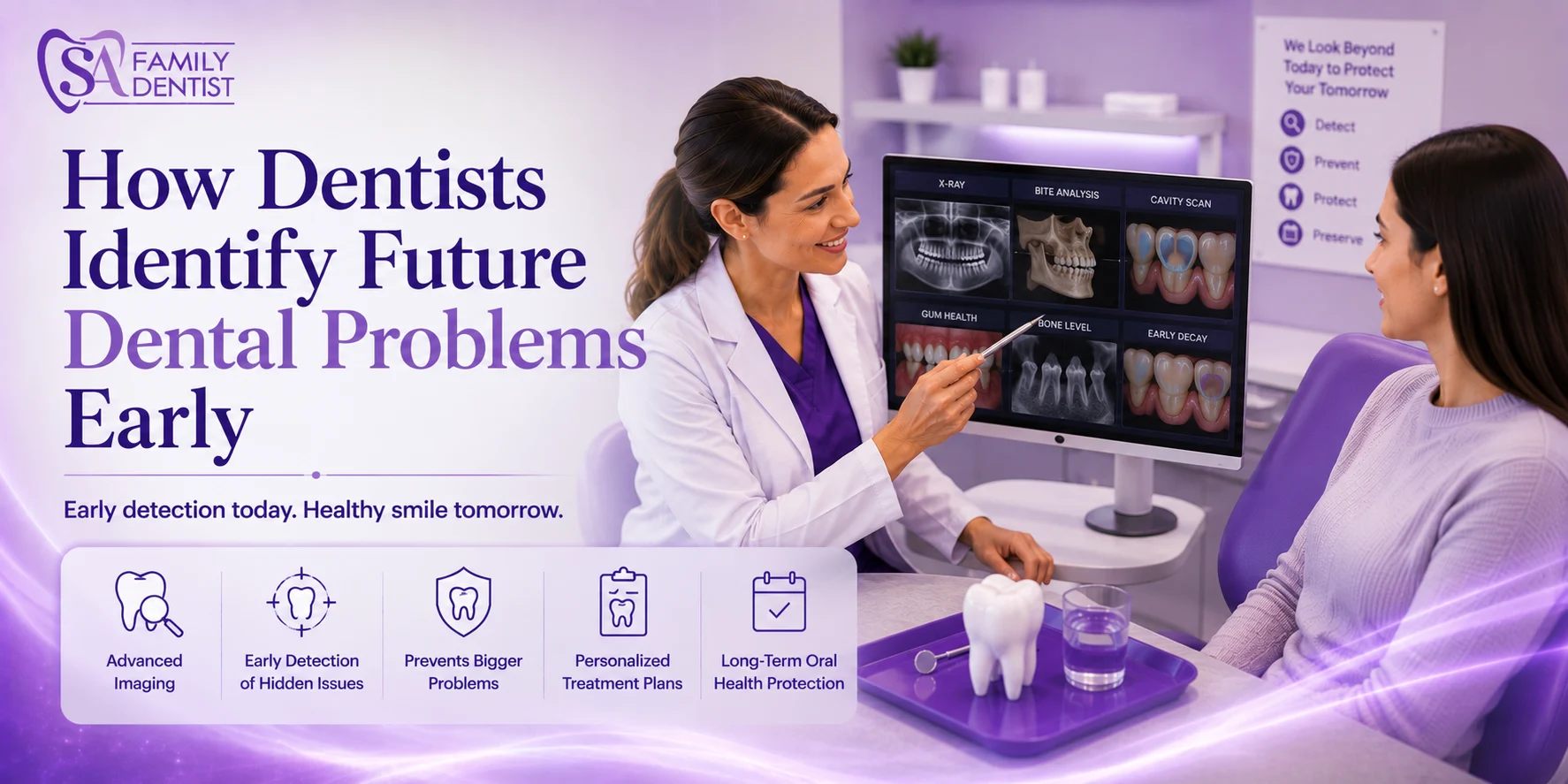
Digital X-Rays And Cone Beam Imaging
Standard X-rays show what’s there. Digital X-rays show it with more clarity and less radiation, and they allow comparison over time, the same image, year over year, showing whether bone levels are holding or slowly declining.
Cone beam computed tomography, or CBCT, takes this further. It produces a three-dimensional image of the jaw, bone structure, roots, and surrounding tissue. A provider reviewing a CBCT can see bone density in areas not visible on standard imaging, identify root proximity issues before they become symptomatic, and map the structural landscape of the jaw in ways that inform treatment decisions years in advance.
This isn’t available at every dental office. When it is, it changes what a provider can see and therefore what they can predict.
Periodontal Charting Over Time
Every dental cleaning involves probing, a thin instrument measuring the depth of the pockets between the teeth and gums at six points per tooth. A healthy pocket is 1 to 3 millimetres. Numbers above that indicate gum disease at various stages of progression.
What makes charting predictive rather than just descriptive is the comparison across visits. A pocket that measured 3mm two years ago and now measures 4mm is a pocket that’s moving in the wrong direction. It hasn’t caused visible symptoms yet. But the trend line is clear.
A provider who tracks this data consistently can identify periodontal deterioration that would otherwise remain invisible until it becomes acute. That early signal is worth a lot in terms of what treatment can still do.
Wear Pattern Analysis
Tooth wear tells a detailed story about function. Wear on the biting edges of front teeth suggests an edge-to-edge bite or forward grinding. Wear on the cusp tips of molars suggests clenching. Wear on the inner surfaces of upper teeth sometimes correlates with acid exposure from reflux or dietary habits.
Each pattern predicts different downstream problems. A provider who recognises the wear pattern for bruxism in a 34-year-old patient isn’t just noting a current finding, they’re seeing the fracture risk, the crown need, and the joint involvement that will follow in 10 years if the habit isn’t addressed.
Saliva And Dry Mouth Indicators
Saliva does more clinical work than most people realise. It buffers acid, remineralises enamel, and mechanically clears bacteria from tooth surfaces. When saliva production is low, from certain medications, dehydration, mouth breathing, or other factors, the decay rate accelerates significantly.
A provider who identifies dry mouth early can recommend interventions that dramatically reduce cavity risk going forward. Without that identification, a patient who develops multiple cavities appears to simply have “bad teeth.” With it, the actual mechanism becomes clear and addressable.
Risk Stratification: The Concept That Changes Everything
Predictive dentistry isn’t just about tools. It’s about how providers synthesise information into a forward-looking risk picture.
A patient with all of the following has a high future burden if nothing changes:
- Moderate grinding habit without a nightguard
- Three fillings placed in the last five years
- Periodontal pockets trending upward at the back molars
- Dry mouth from a long-term medication
- Hasn’t had consistent care in the last three years
A provider who reads this picture isn’t predicting the future through intuition. They’re applying well-established clinical patterns to a specific patient’s data. The intervention recommendations that follow- a nightguard, a deeper cleaning protocol, fluoride treatment for enamel protection, a more frequent recall schedule- directly address the identified risks before they become procedures.
That’s what separates a best dentist in San Antonio Texas from a provider who treats findings in isolation and sends you home until the next problem appears.
What Patients Can Actually Do With This Information
Predictive dentistry only works if the patient is part of the conversation.
When a provider tells you that your gum pockets are trending upward, the right response isn’t to wait for them to cause symptoms. When a provider says your grinding habit has produced visible wear and recommends a nightguard, that recommendation is based on where the pattern leads, not where it is today.
The patients who get ahead of their dental problems aren’t the ones with naturally perfect teeth. They’re the ones who hear the pattern described, take it seriously, and make the small interventions that prevent the large ones.
See What Your Teeth Are Already Predicting
At SA Family Dentist, a comprehensive exam isn’t a formality before the cleaning. It’s a diagnostic conversation that covers what’s there, what’s forming, and what can be done about it before it becomes urgent. If you’re looking for the best dentist in San Antonio Texas, who treats your dental future as seriously as your dental present, that’s the kind of practice worth scheduling with.
Book a comprehensive exam at SA Family Dentist. Find out what your teeth are already telling someone who knows how to listen.
FAQs
1. How can dentists identify dental problems before symptoms appear?
Dentists use routine examinations, digital X-rays, periodontal measurements, bite analysis, and a review of your dental history to detect early changes that may indicate future issues. Identifying these signs early allows treatment before problems become more serious.
2. What is predictive dentistry?
Predictive dentistry is an approach that assesses your current oral health, risk factors, and long-term trends to help prevent future dental problems. It focuses on early intervention rather than waiting until symptoms develop.
3. Why are regular dental check-ups important if my teeth feel healthy?
Many dental conditions, including tooth decay, gum disease, and teeth grinding, can progress without causing pain. Routine check-ups help identify these issues in their early stages, when treatment is often simpler and more effective.
4. Can teeth grinding increase my risk of future dental problems?
Yes. Ongoing teeth grinding can gradually wear down enamel, create tooth cracks, damage restorations, and place extra stress on the jaw joints. Early diagnosis and treatments such as a custom nightguard can help reduce these risks.
5. What information does a comprehensive dental examination provide?
A comprehensive examination evaluates your teeth, gums, bite, existing dental work, and overall oral health. It also helps identify potential future concerns, allowing your dentist to recommend preventive measures that support long-term dental health.