
When you decide to refresh your smile, choosing the right procedure can feel overwhelming. With so many options available today, it is easy to wonder whether a simple whitening treatment will do the trick or if you need something more comprehensive like porcelain veneers. Both procedures are wildly popular, but they solve very different cosmetic concerns.
If you have been searching for a trusted cosmetic dentist nearby, understanding how these two popular treatments compare can help you make an informed decision that aligns perfectly with your goals, budget, and lifestyle.
Understanding Professional Teeth Whitening
Teeth whitening is the most straightforward, non-invasive way to brighten your smile. Over time, factors like coffee, tea, red wine, smoking, and natural aging cause dark pigments to collect deep within your tooth enamel. Professional whitening treatments use concentrated, enamel-safe bleaching agents to break down those stubborn stains.
Who Is Teeth Whitening Ideal For?
Professional whitening is a great choice if you have:
- Teeth that are naturally well-aligned and evenly shaped
- Mild to moderate surface discoloration from food, drink, or age
- A healthy natural tooth structure with no major chips, gaps, or structural damage
Pros and Cons of Whitening
- Pros: Highly affordable, fast results (often in a single visit or a few weeks of custom home trays), and completely non-invasive with zero removal of tooth enamel.
- Cons: Results are not permanent and require periodic touch-ups; it cannot alter the shape, size, or alignment of your teeth; and it does not lighten existing tooth-colored fillings or crowns.
Understanding Dental Veneers
Dental veneers are ultra-thin, custom-crafted shells of high-grade porcelain or composite resin that are permanently bonded to the front surface of your teeth. Rather than simply changing the color of your enamel, veneers act as a complete cosmetic reset for the teeth in your smile line.
Who Are Veneers Ideal For?
Veneers are typically recommended if you want to correct:
- Deep, intrinsic tooth discoloration that does not respond to chemical bleaching (such as staining caused by past medications)
- Worn-down, chipped, or cracked teeth
- Noticeable gaps between teeth or slight alignment issues
- Irregularly shaped, small, or unevenly sized teeth
Pros and Cons of Veneers
- Pros: They resolve multiple cosmetic issues at once (color, shape, length, and minor alignment), offer long-lasting durability (often 10 to 15+ years with proper care), and are highly stain-resistant.
- Cons: They require a higher financial investment, and the process usually involves removing a tiny layer of natural enamel, making it an irreversible treatment.
Key Differences at a Glance
To help narrow down your choices, consider how both options stack up across key factors:
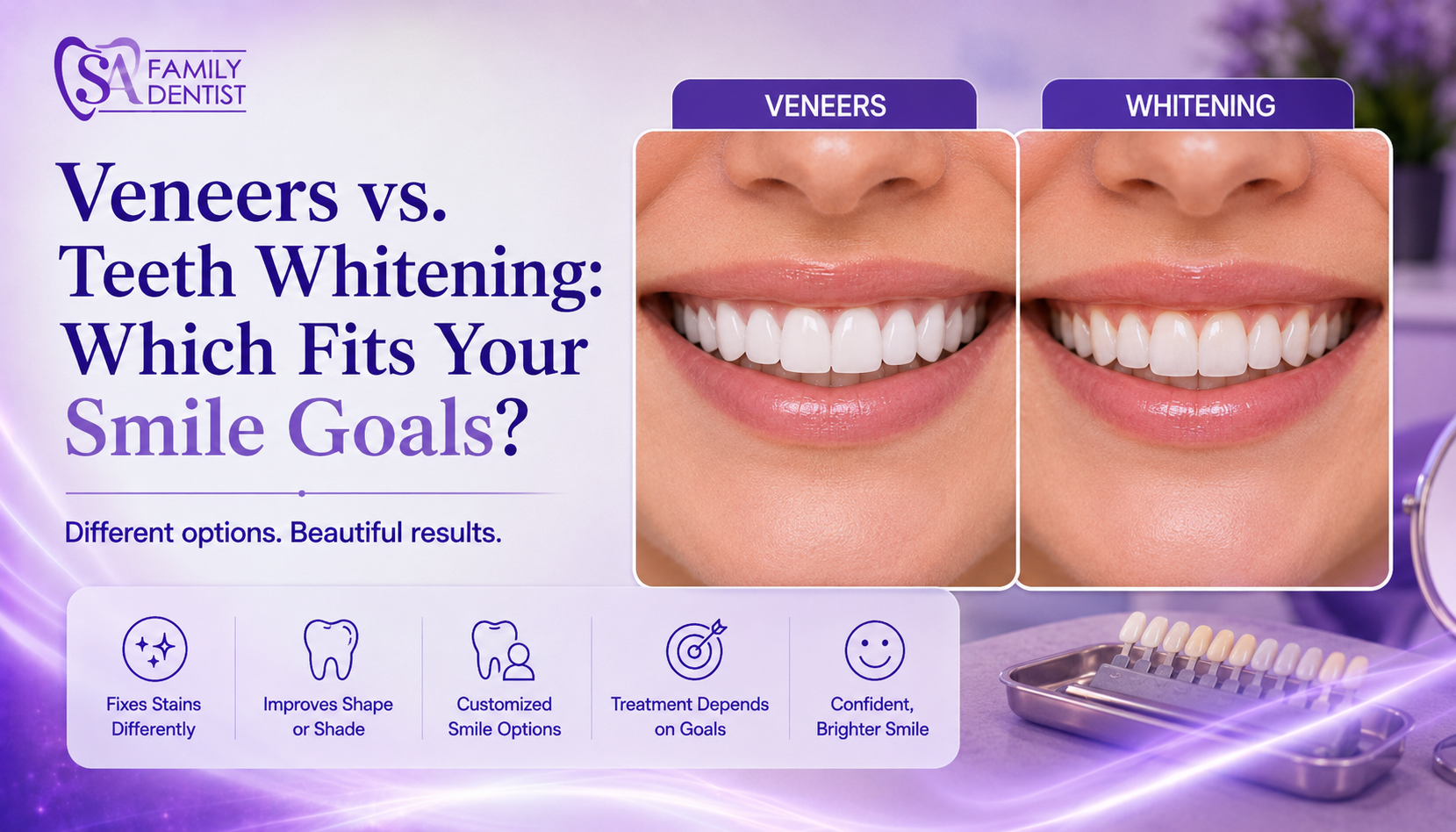
- Primary Purpose: Whitening strictly brightens your natural enamel color. Veneers reshape, resize, realign, and brighten your entire tooth surface.
- Treatment Timeline: In-office whitening takes about an hour, while home kits take 1 to 2 weeks. Veneers generally require 2 to 3 appointments over a couple of weeks to plan, prepare, and place your custom shells.
- Permanence: Whitening results fade over time depending on your diet and habits. Veneers provide a long-term, semi-permanent transformation that lasts for years.
- Invasiveness: Whitening requires no alteration of your teeth. Veneers require minimal enamel reshaping to ensure a seamless, natural fit along your gumline.
How to Decide What Is Right for You
Making the right choice comes down to what you want to achieve when you look in the mirror:
- If you love the natural shape and position of your teeth and simply want them to pop: Go with professional whitening.
- If you want to mask structural flaws, alter tooth proportions, or permanently fix deep stubborn stains: Veneers are likely your best fit.
- If you aren’t sure: A personalized consultation with an experienced cosmetic team can help you map out a realistic, custom treatment plan.
Transforming Your Smile with Confidence
Investing in your smile is about more than just aesthetics; it is about boosting your everyday confidence. Choosing a practice that listens to your personal goals ensures you achieve a look that feels completely authentic to you.
Personalized Cosmetic Care for Your Natural Smile
Whether you are looking to lift years of surface stains or considering a full smile transformation, finding a caring team makes all the difference. If you are searching for an experienced cosmetic dentist nearby in San Antonio, SA Family Dentist offers comprehensive, tailored cosmetic care across three convenient locations on Braun Road, Nacogdoches Road, and Jackson Keller Road. Their gentle team utilizes modern technology to help you evaluate your options and achieve a healthy, confident smile you’ll love showing off.
Frequently Asked Questions
1. Does professional teeth whitening cause permanent tooth sensitivity?
No. While some patients experience mild, temporary sensitivity during or immediately after whitening, modern professional formulas contain desensitizing agents to keep you comfortable. Any sensitivity usually fades within 24 to 48 hours.
2. Can you get veneers on just one or two teeth?
Yes! Veneers are completely customizable. You can get a single veneer to fix a damaged or discolored front tooth, or opt for a full set of 6 to 8 veneers to transform your entire top smile line.
3. Will porcelain veneers look fake or unnaturally white?
Not when done correctly. Today’s dental porcelain is designed to match the natural translucency, light reflection, and subtle color variations of real tooth enamel, ensuring a balanced and realistic result.
4. Can I whiten my veneers if they get stained over time?
No. Bleaching gels only work on natural tooth enamel and will not change the shade of porcelain veneers, crowns, or composite bonding. Fortunately, high-quality porcelain is extremely stain-resistant.
5. How do I maintain my results after getting veneers or whitening?
For both treatments, maintain excellent oral hygiene by brushing twice daily and flossing. If you have veneers, avoid using your teeth as tools to open packaging, and wear a custom nightguard if you grind your teeth while sleeping.