
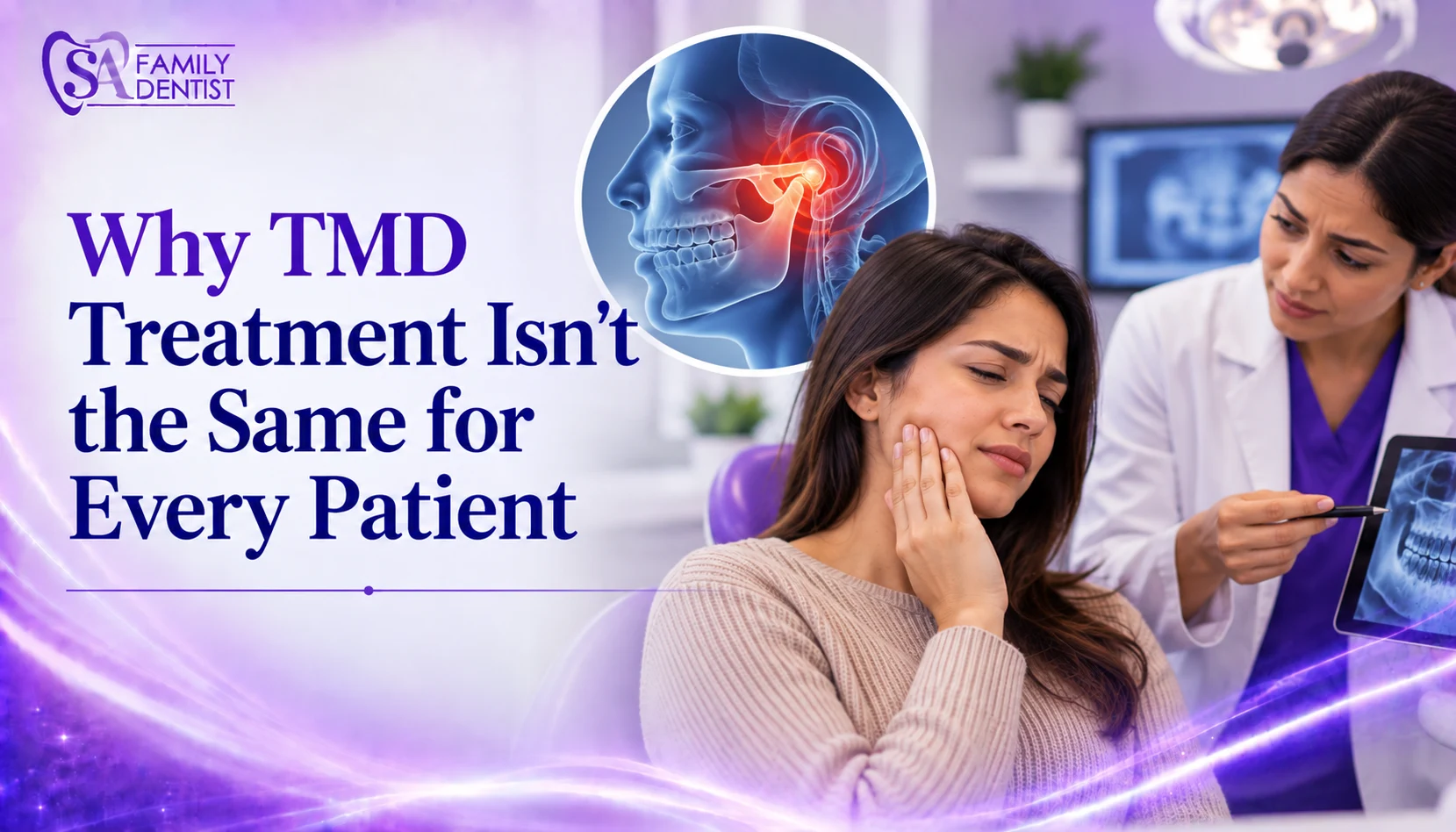
Two people can both complain of jaw pain and need completely different care. One may be clenching their teeth, another may have a problem involving the jaw joint, while someone else’s symptoms may be influenced by several factors at once. This is why TMD treatment should begin with understanding the problem rather than assuming every sore or clicking jaw needs the same solution.
Temporomandibular disorders, commonly called TMD, can affect the jaw joints, chewing muscles and related structures. Because the causes and symptoms vary, treatment needs to be individual too.
“My Jaw Hurts” Is Only the Starting Point
TMD is not one single condition with one predictable set of symptoms.
A patient might visit a general dentist in San Antonio because their jaw aches every morning. Someone else may be concerned about clicking near the ear. Another patient might notice that opening their mouth has become uncomfortable.
Common TMD symptoms can include:
- Jaw pain or tenderness
- Pain around the jaw joint
- Difficulty or discomfort while chewing
- Clicking or popping sounds
- Limited jaw movement
- Headaches or facial discomfort
- Jaw locking in some cases
Even these symptoms need context. A clicking jaw without pain or restricted movement, for example, does not necessarily require the same approach as persistent pain that interferes with eating.
The Same Symptom Can Have Different Explanations
This is one reason self-diagnosing TMD can be difficult.
Take morning jaw soreness. A patient who clenches or grinds their teeth during sleep might experience it. But jaw discomfort can also involve the chewing muscles, the temporomandibular joint itself or other conditions.
A dentist therefore needs to investigate rather than treat the symptom in isolation.
An assessment may include discussing:
- When the symptoms started
- Where the pain occurs
- Whether symptoms come and go
- Jaw movement
- Grinding or clenching habits
- Changes in the bite
- Previous injuries
- Relevant medical and dental history
The answers help build a clearer picture of what may be contributing to the problem.
Why a Mouthguard Is Not Automatically the Answer
Many patients associate jaw pain with a nightguard.
An oral appliance may be appropriate for certain patients, particularly when grinding or clenching is part of the problem. But automatically giving every TMD patient the same appliance overlooks how varied these disorders can be.
Effective TMD treatment depends on what the examination suggests.
For one person, reducing strain on the jaw and monitoring symptoms may be appropriate. Another may benefit from an oral appliance. Someone with a more complicated joint problem may require additional evaluation or referral.
The treatment should follow the diagnosis, not the other way around.
Sometimes Conservative Care Comes First
More treatment does not always mean better treatment.
Many TMD problems can be approached conservatively, depending on the cause and severity. A dentist may recommend temporary changes intended to reduce stress on the jaw while symptoms are monitored.
These could involve avoiding habits that unnecessarily strain the jaw or making temporary adjustments to what and how you eat.
For example, repeatedly chewing gum, biting hard foods or consciously clenching the teeth can increase workload on already uncomfortable jaw muscles.
The exact advice should depend on the individual assessment.
Teeth Grinding Changes the Conversation
Bruxism is the habit of grinding or clenching the teeth, often without realizing it.
Some people clench while concentrating during the day. Others grind during sleep.
Signs may include worn teeth, chipped restorations or jaw muscle tenderness. However, tooth wear alone does not prove that grinding is responsible for every jaw symptom.
A general dentist in San Antonio can examine the teeth and jaw and consider whether grinding may be contributing to the patient’s concerns.
If it is, protecting the teeth and reducing the effects of excessive force may become part of the management plan.
What If the Jaw Clicks but Does Not Hurt?
A click can sound alarming, especially when it happens every time you open your mouth.
But sound alone does not tell the entire story.
Some jaw joint sounds occur without pain or significant loss of function. In those situations, active treatment may not always be necessary. A dentist can assess whether the clicking is accompanied by tenderness, locking, restricted movement or other concerning symptoms.
This is another example of why TMD treatment cannot be based on one symptom alone.
When Does TMD Need More Investigation?
Persistent symptoms deserve attention, particularly when they interfere with normal activities.
Arrange an evaluation if you experience ongoing jaw pain, difficulty opening your mouth, repeated locking or significant discomfort while eating.
Not every case can or should be managed entirely within general dentistry. If the problem is complex or another condition needs to be ruled out, further evaluation or specialist referral may be appropriate.
Knowing when to refer is part of responsible patient care.
The Right Plan Starts With the Right Assessment
There is no universal TMD treatment because there is no universal TMD patient. Symptoms, contributing factors, oral health and the structures involved can differ considerably from one person to another.
SA Family Dentist provides TMD care alongside comprehensive dental services in San Antonio. If jaw pain, clicking, clenching or changes in jaw movement are affecting you, a general dentist in San Antonio can evaluate your symptoms and discuss an appropriate next step based on what is actually happening.
SA Family Dentist also has convenient locations in Braun, Nacogdoches, and Jackson Keller, making it easy to choose the office nearest to you for personalized dental implant care.
Frequently Asked Questions
1. Is TMD the same as TMJ?
No. TMJ refers to the temporomandibular joint itself. TMD refers to disorders affecting the joint, chewing muscles or related structures.
2. Does every clicking jaw need treatment?
Not necessarily. Clicking without pain or restricted movement may not require the same care as painful or locking joints. A dental assessment can help determine its significance.
3. Can teeth grinding contribute to TMD symptoms?
Grinding and clenching can place additional stress on the jaw muscles and teeth and may contribute to symptoms in some patients.
4. Will a nightguard fix TMD?
Not in every case. Oral appliances may be useful for certain patients, but appropriate management depends on the cause and nature of the symptoms.
5. When should I see a dentist about jaw pain?
Seek an evaluation when pain persists, jaw movement becomes difficult, the jaw repeatedly locks or symptoms begin interfering with eating and everyday activities.