
It is easy to assume that a toothache is confined to your mouth. When life gets busy, taking an over-the-counter pain reliever and pushing through the day seems like a convenient fix. However, a toothache is rarely just a temporary ache; it is usually an active bacterial infection. And unlike a minor sore throat or seasonal cold, a bacterial dental infection cannot heal on its own.
If left unmanaged, what starts as localized pain in a single tooth can travel through blood vessels and soft tissue, turning into a systemic health issue. Recognizing the risks of waiting helps you understand when to search for a 24-hour emergency dentist in San Antonio before a simple problem becomes a major health concern.
How a Localized Tooth Infection Spreads
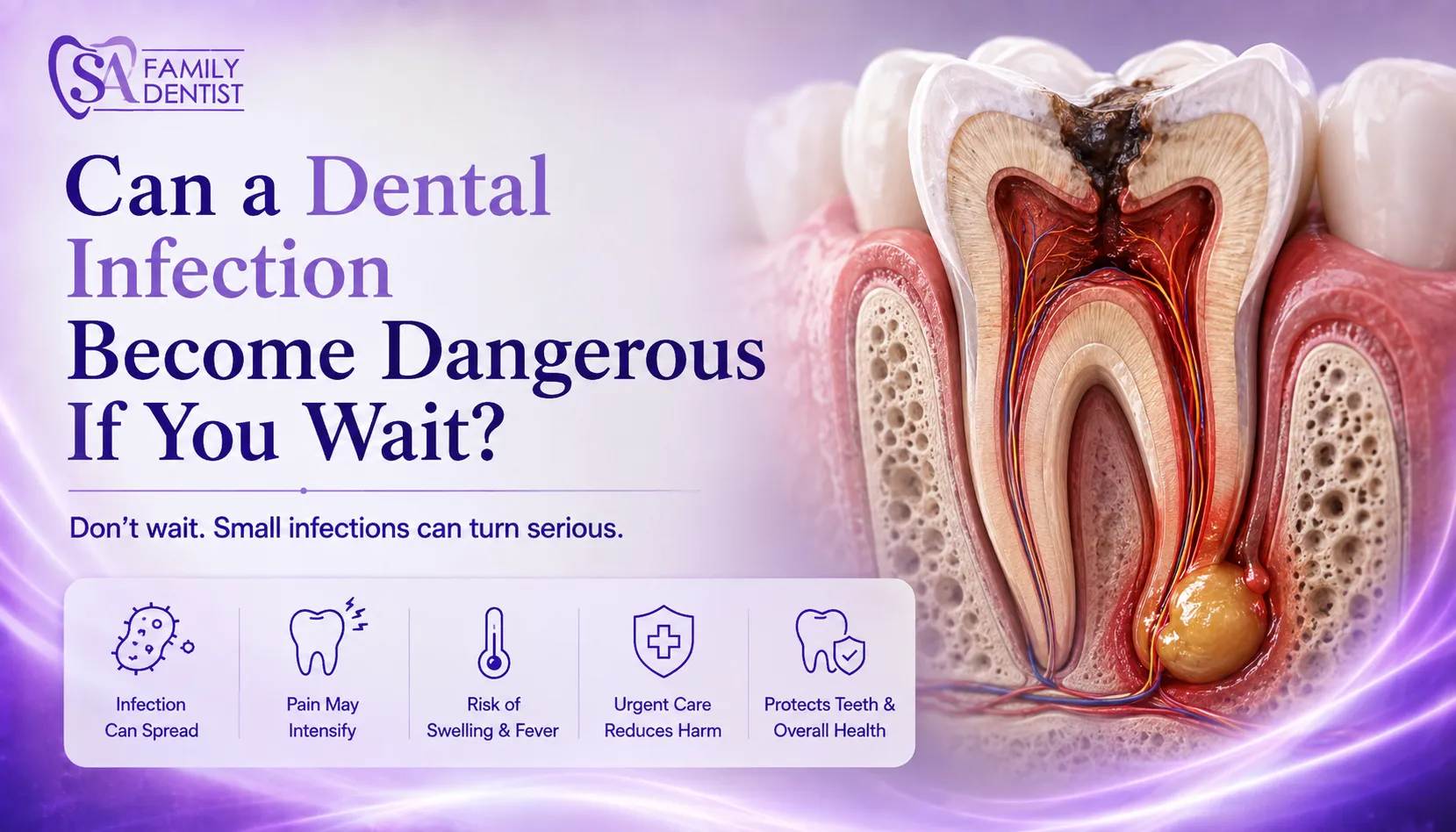
Your teeth are directly connected to the rest of your body through a rich network of blood vessels and nerves. When decay breaks through your enamel and enters the soft pulp chamber at the center of your tooth, bacteria multiply rapidly.
If the infection is not removed, it follows the path of least resistance:
- Root Tip Abscess: Bacteria exit through the tiny opening at the tip of the tooth root, creating a pocket of pus in the surrounding jawbone.
- Soft Tissue Migration: The infection breaks through the bone into adjacent muscles and tissues of the jaw, floor of the mouth, or neck.
- Vascular System Entry: Bacteria enter local blood vessels, allowing them to travel to distant organs and systems throughout the body.
Serious Health Risks of an Untreated Dental Abscess
When bacteria escape the tooth root and spread into surrounding tissues, the complications become far more complex than a simple toothache:
- Ludwig’s Angina: A serious bacterial infection that rapidly swells the floor of the mouth and tissues under the tongue and neck. As swelling progresses, it can block your airway and make breathing extremely difficult.
- Sinus Involvements: Infections in the upper back teeth sit very close to your maxillary sinuses. Bacteria can easily break through into the sinus cavity, causing persistent congestion, facial pressure, and severe sinus infections.
- Jawbone Damage (Osteomyelitis): Chronic, unmanaged infections can erode the surrounding jawbone tissue, weakening the bone structure that supports your neighboring healthy teeth.
- Systemic Complications: If bacteria enter your bloodstream (a condition known as bacteremia), they can spread throughout your body, potentially leading to widespread inflammation or severe systemic stress.
Telltale Signs an Infection Is Escalating
If you have an active toothache, paying close attention to systemic warning signs is crucial. You should seek immediate professional attention from an emergency care team if you notice any of these symptoms:
- Rapid swelling along your jaw, cheek, neck, or under your tongue
- High fever, chills, or persistent cold sweats
- Difficulty opening your mouth, swallowing food, or breathing comfortably
- Severe, throbbing head pain radiating from your jaw line
- Sudden, foul-tasting discharge from a pimple-like bump on your gums
Why “Waiting It Out” Never Works
A common misconception is that if a severe toothache suddenly stops hurting, the infection has cleared up. In reality, the absence of pain usually means the nerve tissue inside the tooth has completely died.
While you may no longer feel the sharp pain, the bacteria causing the issue are still very much active in the underlying bone and gum tissue. They will continue to destroy surrounding bone and spread to adjacent areas until the source is physically removed by a dental professional.
Taking Action to Protect Your Overall Health
Addressing a dental infection early is always simpler, faster, and more comfortable than treating a widespread issue. Gentle local numbing, low-radiation digital imaging, and modern infection control allow dentists to resolve deep tooth pain quickly and effectively.
Prompt, Gentle Relief When You Need It
When a dental infection causes sudden pain, swelling, or worry, having a trusted care team makes all the difference. If you are searching for a 24-hour emergency dentist in San Antonio or need urgent same-day care, SA Family Dentist offers responsive, compassionate treatment across three convenient locations on Braun Road, Nacogdoches Road, and Jackson Keller Road. Their gentle team is dedicated to stopping pain, clearing away dangerous infections, and protecting your health in a calm, welcoming environment.
Frequently Asked Questions
1. How long does it take for a tooth infection to become dangerous?
It varies depending on your overall health and the type of bacteria present. An infection can remain localized for weeks or spread into soft tissues within a few days. Any infection with visible swelling should be evaluated right away.
2. Will taking antibiotics cure my tooth infection completely?
No. Antibiotics can help control the spread of bacteria in surrounding soft tissues, but they cannot enter the dead inner chamber of the tooth. Physical treatment from a dentist is required to eliminate the root cause.
3. What should I do if a dental infection makes it hard to breathe?
If swelling from a tooth infection begins to interfere with your ability to swallow or breathe, seek emergency medical care at the nearest hospital emergency room immediately.
4. What is the difference between a cavity and a dental abscess?
A cavity is surface decay affecting the enamel and dentin layers of a tooth. An abscess is a collection of pus caused by a deep bacterial infection that has reached the nerve and spread into the surrounding bone.
5. Can a tooth with a severe infection still be saved?
Yes, in many cases. Root canal therapy allows your dentist to thoroughly clean out infected pulp, seal the inner tooth, and top it with a protective crown so you can keep your natural tooth for years to come.