
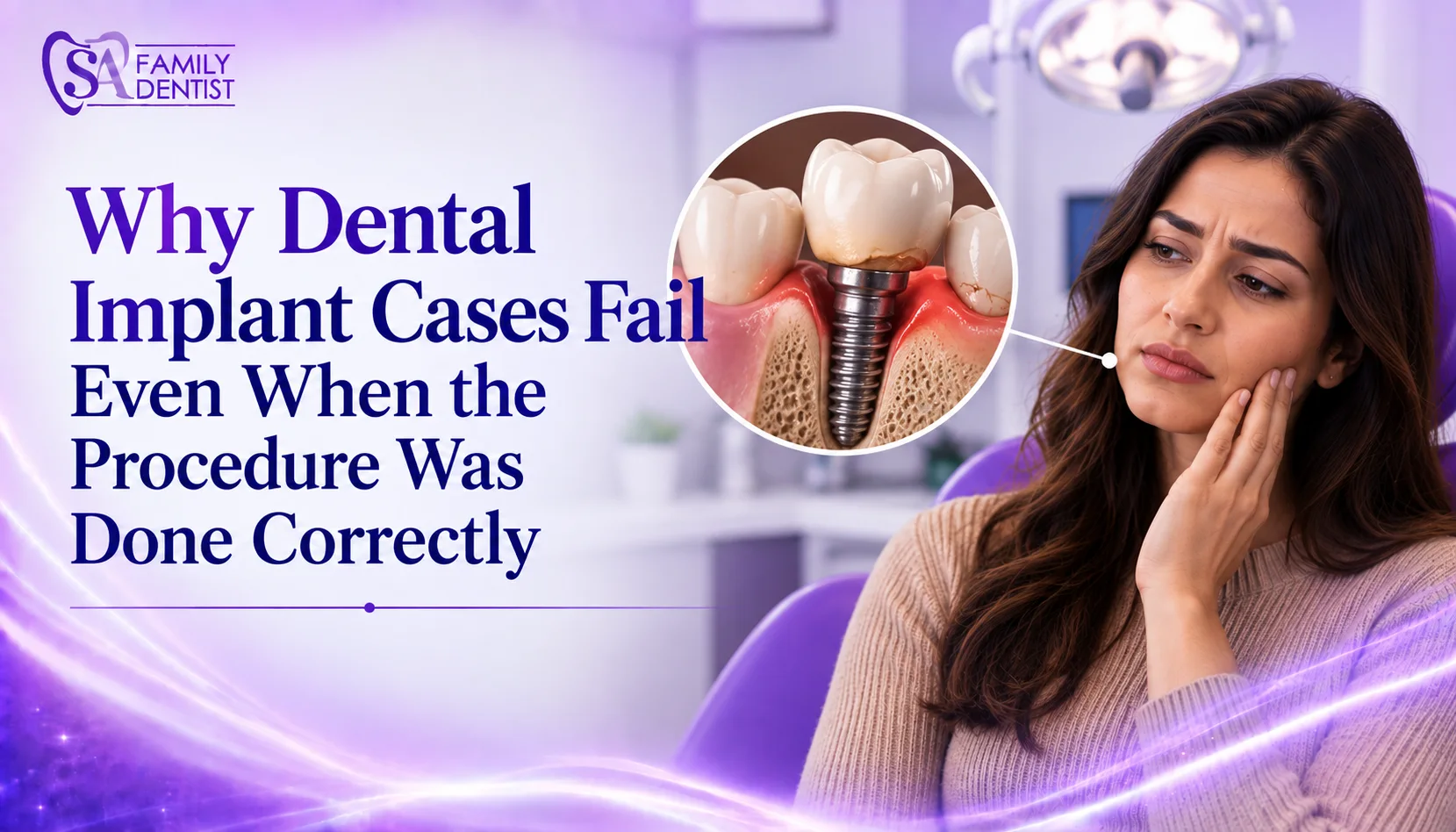
Dental implant success depends on more than what happens during surgery. An implant may be placed correctly, in the right position and with proper technique, yet problems can still develop during healing or years later. That is why patients considering the best dental implants in San Antonio TX should also understand the biological, medical and lifestyle factors that affect long-term implant health.
A Correct Procedure Does Not Guarantee Perfect Healing
After an implant is placed, the surrounding jawbone needs to heal and form a stable connection with the implant. This process is known as osseointegration.
The dentist can perform the procedure correctly, but the body still has to complete the healing process. In some cases, the bone may not integrate as expected. This can leave the implant unstable and eventually lead to failure.
Several factors can interfere with healing, including:
- Poor bone quality or insufficient bone support
- Smoking or tobacco use
- Certain health conditions that affect healing
- Infection around the implant
- Excess pressure on the implant before healing is complete
This is one reason implant treatment requires careful planning before surgery and monitoring afterwards.
Gum Problems Can Develop Around Dental Implants
Dental implants cannot develop cavities, but the tissues surrounding them can still become inflamed or infected.
Plaque and bacteria can collect around an implant just as they can around natural teeth. Early inflammation around an implant is called peri-implant mucositis. If the condition progresses and begins affecting the supporting bone, it can develop into peri-implantitis.
Warning signs may include:
- Bleeding while brushing
- Red or swollen gums
- Tenderness around the implant
- Gum recession
- Persistent discomfort
- Changes in the stability of the implant
Ignoring these signs can allow the problem to become more difficult to manage.
Oral Hygiene Still Matters After Implant Treatment
Some patients assume an artificial tooth requires less maintenance because it cannot decay. That assumption can put an otherwise successful implant at risk.
The crown may be artificial, but the surrounding gums and bone are living tissues.
Daily brushing and cleaning around the implant help control plaque. Professional dental examinations are also important because a dentist may notice changes around an implant before the patient feels anything unusual.
When searching for the best dental implants in San Antonio TX, patients should therefore think beyond the placement procedure itself. Long-term maintenance is an important part of implant treatment.
Smoking Can Affect Implant Healing
Smoking is an important risk factor because it can interfere with the body’s ability to heal properly.
It may affect blood flow and tissue healing and is associated with a higher risk of complications around dental implants. Patients who smoke should be open about their tobacco use during their implant consultation so their individual risks can be discussed.
This does not automatically mean every smoker will experience implant failure. It means the dentist needs a complete picture of the patient’s health and habits before recommending treatment.
Medical Conditions Can Change the Risk Profile
General health and oral health are closely connected when implants are involved.
Conditions such as diabetes can influence healing and gum health, particularly when they are not well controlled. Previous periodontal disease can also increase the risk of problems developing around an implant.
That is why a proper implant assessment should consider more than the missing tooth. A dentist may need to review:
- Medical history
- Current medications
- Gum health
- Bone availability
- Previous dental problems
- Smoking history
- Oral hygiene habits
Patients should provide accurate health information, even when a condition appears unrelated to dentistry.
Too Much Force Can Also Cause Problems
Implants need to handle normal biting and chewing forces, but excessive or poorly distributed pressure can create complications.
Teeth grinding or clenching can place repeated stress on the implant and the restoration attached to it. Chewing very hard objects can also damage an implant-supported crown.
Changes in the bite should not be ignored. If an implant suddenly feels different while chewing, having it evaluated early may help identify the cause before the problem progresses.
Implant Success Is a Long-Term Partnership
The best dental implants in San Antonio TX are not simply about completing surgery successfully. Patient selection, healing, gum health, home care and regular monitoring all contribute to how well an implant performs over time.
SA Family Dentist provides dental implant care for patients in San Antonio. If you are considering an implant or are concerned about an existing one, the team can evaluate your oral health and discuss appropriate treatment options based on your individual needs.
SA Family Dentist also has convenient locations in Braun, Nacogdoches, and Jackson Keller, making it easy to choose the office nearest to you for personalized dental implant care.
Frequently Asked Questions
1. Can a dental implant fail years after placement?
Yes. Problems such as inflammation around the implant, bone loss or excessive biting forces can develop later even after successful initial healing.
2. What is the first sign that an implant may be failing?
Possible signs include bleeding gums, swelling, discomfort, gum recession or movement around the implant. Any unusual change should be checked by a dentist.
3. Can poor brushing cause dental implant failure?
Poor plaque control can contribute to inflammation and disease around an implant, which may eventually affect its supporting bone.
4. Does smoking increase the risk of implant problems?
Yes. Smoking is associated with impaired healing and a higher risk of complications around dental implants.
5. How can I help my dental implant last longer?
Maintain good daily oral hygiene, attend regular dental examinations, avoid tobacco and tell your dentist if you notice pain, bleeding, movement or changes when biting.