
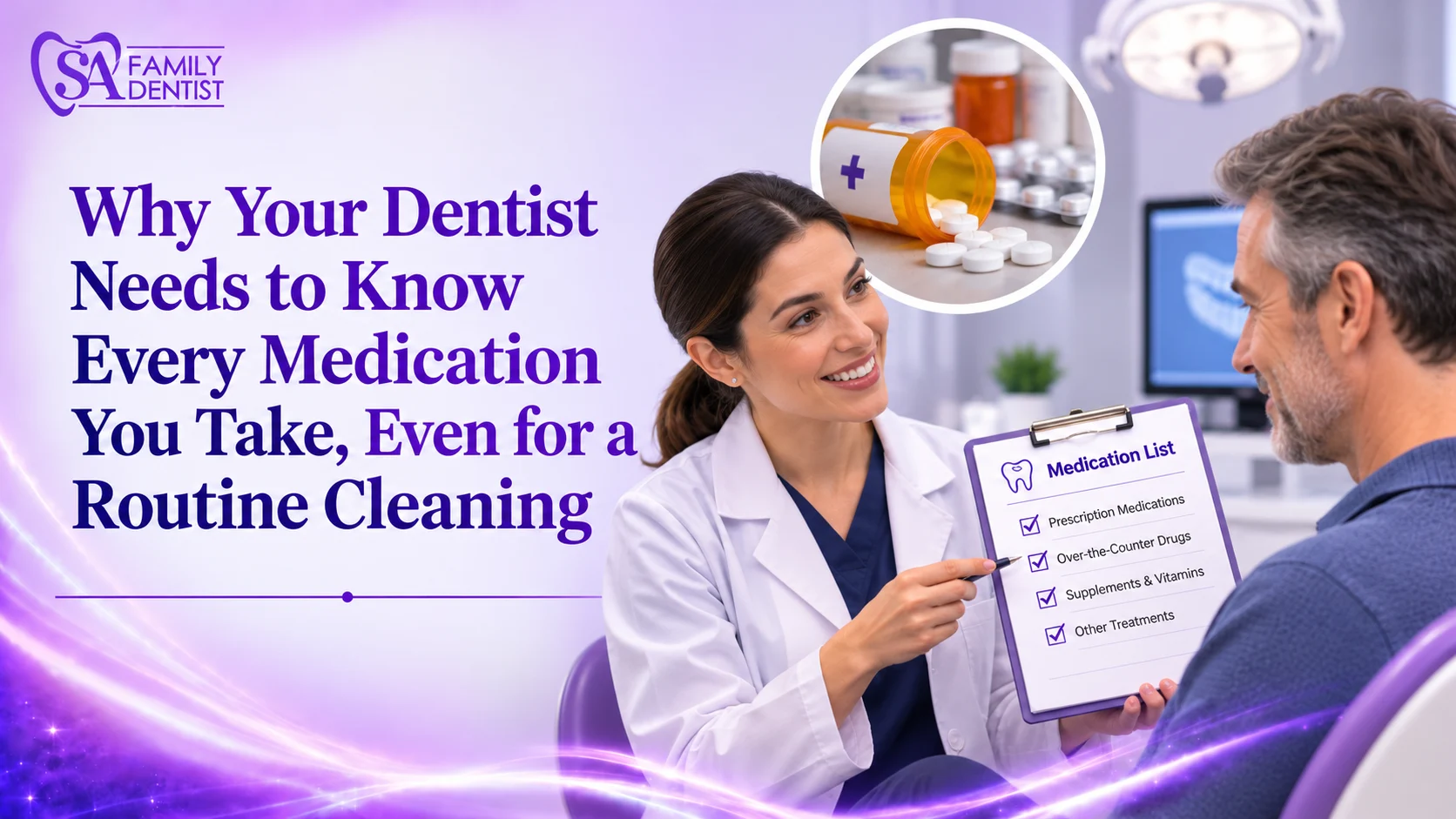
You know the clipboard. Name, birthday, insurance, and then that line near the bottom: current medications. Most of us jot down the blood pressure pill and call it done. The allergy tablet you take every spring? The baby aspirin? The inhaler in your gym bag? Nah. You’re just getting your teeth cleaned.
Except those are exactly the things we want to hear about.
If you’re searching for a dentist near me in San Antonio, TX, here’s one small habit that makes every visit safer: tell us everything you take. Prescriptions, over-the-counter stuff, vitamins, all of it. Here’s why it matters.
A cleaning isn’t as simple as it looks
Sure, it’s a quick appointment. But your hygienist is still working right along your gumline, and some medications change how much you bleed there. Your list also helps us decide on X-rays, how deep to clean, and whether we should loop in your doctor first.
The American Dental Association (ADA) is clear on this: share prescription and over-the-counter products, and update the list whenever something changes. Supplements count. Some can affect bleeding or clash with prescriptions, even if they feel harmless.
Dry mouth: the side effect nobody connects to their teeth
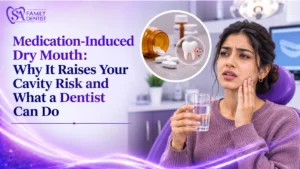
Ask a room full of people what their blood pressure pill does to their teeth and you’ll get blank stares. But according to the ADA, dry mouth is a common side effect of medications, and it matters because saliva is your mouth’s cleanup crew. It rinses away food and neutralizes the acids plaque makes. Less saliva, more cavities.
Antihistamines, decongestants, blood pressure medicines, antidepressants, painkillers, and diuretics can all do it. People often blame age when the real culprit is the medicine cabinet.
The good news is that once we know, we can help. Sugar-free gum, saliva substitutes, extra fluoride. Sometimes your doctor or pharmacist can adjust the medication, too.
Blood thinners, bone drugs, and other things we plan around
Blood thinners can change how much you bleed during a deep cleaning, an extraction, or implant surgery. Don’t stop yours on your own. Ever. We may talk with your physician first so the plan works for both of us.
The ADA also notes that bone-strengthening drugs, mostly those used for cancer and, less often, osteoporosis, can rarely cause serious jaw problems. Mention them before any extraction or implant work.
A few more. Some medications make gum tissue overgrow or feel tender, which makes plaque harder to clean away. Inhalers can cause thrush, a fungal infection with painful white spots, and rinsing after each use may help prevent it. And for certain heart conditions, antibiotics are recommended before some dental procedures, though most people don’t need them. That call belongs to your dentist and your doctor.
How this plays out across our services
Your medication list touches almost everything we do at SA Family Dentist.
In general dentistry, it shapes your checkups, X-rays, and cleanings. Wondering how often you should come in? That depends on several factors, and medications are one of them.
Planning dental implants? Healing, bleeding, and bone health all matter before surgery.
In pain and heading in for a root canal or emergency dentistry? Tell us what you’ve already taken, including over-the-counter painkillers, so we can choose pain relief and anesthesia safely.
Cosmetic dentistry and clear aligners are in the mix too. Dry mouth raises cavity risk, which is a bummer if you’ve put money into crowns, veneers, or bonding. Aligners sit against your teeth much of the day, so mention a dry mouth or sore gums early. And if you’re dealing with gum disease, medications can influence gum health, so we keep them in mind during treatment and ongoing care.
What to tell your dentist
No need to memorize anything. Snap a photo of your pill bottles or screenshot your pharmacy app. Then tell us about:
- Prescriptions and doses
- Over-the-counter medicines like pain relievers and allergy pills
- Vitamins, herbal products, and supplements
- Inhalers, patches, and injections
- Anything new, or anything you just stopped
- Allergies, recent surgeries or hospital stays, cancer treatment, and pregnancy
Do it every visit. Last year’s list might not be right today.
“But it feels private”
We get it. Medications are personal. But nobody here is judging, and what you share goes into your confidential health record. Leave it out and we’re guessing. Share it and we can protect you.
Schedule a visit at SA Family Dentist
Looking for a dentist near me who actually asks about your health? SA Family Dentist offers general dentistry for adults and kids at three San Antonio locations: Braun Road, Nacogdoches Road, and Jackson Keller Road. Not sure about insurance? Ask about our Smile Club membership. Pick the closest office on our locations page, call or book online, and bring your list. We’ll take it from there.
Frequently asked questions
1. Do I really need to tell my dentist about over-the-counter medicines and supplements?
Yes. The ADA recommends sharing both prescription and over-the-counter products. People forget vitamins and herbal supplements a lot, and some of those can affect bleeding or interact with medications.
2. Can my medication cause cavities?
Indirectly, yes. Many medications cause dry mouth, and less saliva means more cavity risk. We can suggest ways to protect your teeth.
3. Should I stop my blood thinner before a dental visit?
No, not unless your prescribing doctor tells you to. Tell us you take one, and we can coordinate with your physician if needed.
4. Is it safe to get a cleaning if I take medicine for blood pressure, diabetes, or another long-term condition?
For many people, yes. Sharing your list just lets us adjust the visit if something calls for it.
5. What if I forgot to list something?
Tell your hygienist or call us as soon as you remember. Late is better than never.
6. How do I choose a dentist near me who takes my health history seriously?
Look for a practice that asks detailed questions, explains why, and updates your history at every visit.