
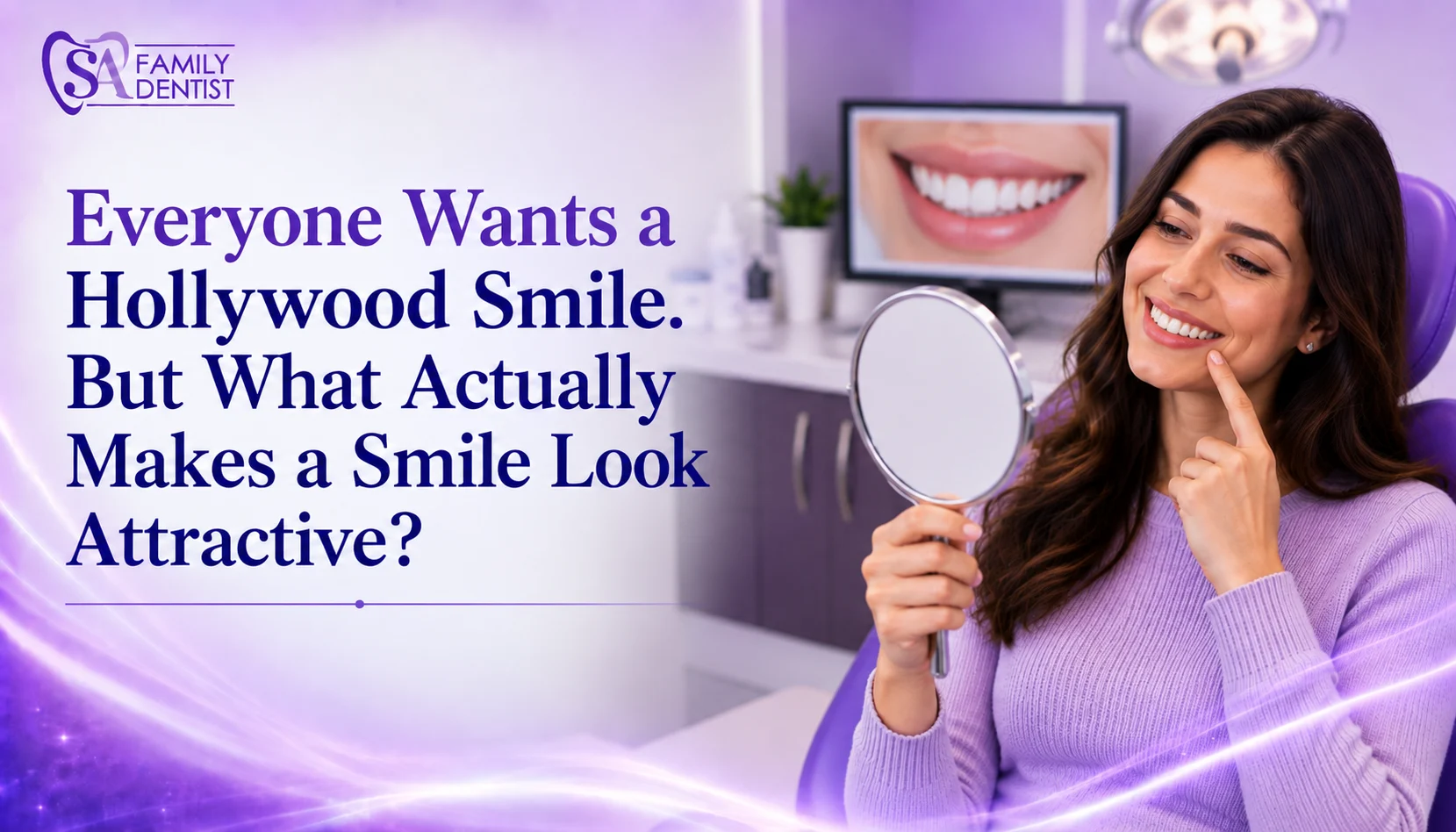
A bright, perfectly even set of teeth is often presented as the ideal smile. In reality, an attractive smile is rarely about making every tooth identical or choosing the whitest possible shade. A well-planned smile makeover considers proportion, symmetry, tooth shape, gum appearance and how all these features work with your face. The result should still look like your smile, only improved.
That distinction matters because cosmetic dentistry is not simply about creating “perfect” teeth.
The Whitest Smile Is Not Always the Most Natural
Whiter teeth can make a noticeable cosmetic difference, but brighter does not automatically mean better.
Teeth naturally have variations in shade and translucency. A color that looks appropriate for one person may appear artificial on another.
When planning cosmetic treatment, a cosmetic dentist may consider the existing teeth, skin tone and overall appearance of the smile rather than focusing on one shade in isolation.
The aim is balance. Teeth should look healthy and bright without becoming the only feature people notice when you smile.
Your Teeth Need the Right Proportions
Imagine two front teeth that are extremely long compared with the neighboring teeth. They might be straight and white, yet something about the smile could still look unusual.
Proportion is often the reason.
The visible width and length of teeth influence how balanced a smile appears. Cosmetic treatment may therefore involve much smaller changes than patients expect.
Depending on the concern, attention may be given to:
- Tooth length
- Tooth width
- Differences between neighboring teeth
- Small chips or worn edges
- Uneven tooth shapes
- Spaces between teeth
A successful smile makeover does not necessarily remove every natural difference. Slight variations can actually help a smile retain character.
Symmetry Matters, But Perfection Is Not the Goal
The left and right sides of a natural smile are rarely exact mirror images.
Some degree of visual balance, however, can make the smile appear more harmonious. One noticeably shorter tooth, an uneven edge or an obvious gap may draw attention because it interrupts that balance.
This does not mean every tooth needs treatment.
Sometimes addressing one or two noticeable concerns can change the overall appearance without dramatically altering the entire smile. A conservative approach may be more appropriate than treating healthy teeth simply to achieve absolute symmetry.
Do Not Forget the Gumline
Teeth are only part of what you see when someone smiles.
The gums frame the teeth, so their health and appearance can influence the final result. Redness, swelling or gum disease can affect how a smile looks regardless of how white the teeth are.
This is why cosmetic planning should begin with oral health.
Before recommending cosmetic changes, a cosmetic dentist should consider whether the teeth and gums are healthy enough for the proposed treatment. Improving appearance without addressing active dental problems first would miss an important part of the picture.
Tooth Shape Can Change the Personality of a Smile
Rounded, square, narrow and broad teeth can create different visual impressions.
There is no single tooth shape that is universally attractive. What works depends on the patient’s existing teeth, facial features and personal preferences.
For example, cosmetic treatment might focus on:
- Smoothing an uneven edge
- Repairing a small chip
- Improving the shape of one tooth
- Reducing the appearance of a minor gap
- Creating better visual consistency between neighboring teeth
These may sound like small details, but cosmetic dentistry often depends on small details.
Straight Teeth Help, But Alignment Is Only One Piece
Straight teeth are commonly associated with an attractive smile, but alignment alone does not determine the result.
A person may have relatively straight teeth but dislike their shade, shape or spacing. Another person may like the natural color of their teeth but want to address crowding.
That is why a smile makeover is not one specific procedure. Depending on individual needs, cosmetic planning may involve whitening, bonding, veneers, clear aligners or other appropriate dental treatments.
Not every patient needs all of them.
Your Smile Also Needs to Function Properly
This part is easy to overlook when looking at dramatic before-and-after images online.
Teeth still need to bite and chew comfortably.
Cosmetic changes should be planned with function in mind, particularly when treatment alters the shape, length or position of teeth. Existing wear, grinding, damaged teeth and bite concerns may affect which options are appropriate.
A beautiful result that creates functional problems is not a successful cosmetic outcome.
So, What Should a Hollywood Smile Actually Look Like?
Probably not like somebody else’s.
The strongest cosmetic results usually respect the features that already belong to the patient. Rather than chasing extreme whiteness or identical teeth, consider whether the smile looks healthy, balanced and natural.
When meeting a cosmetic dentist, explain what you personally dislike about your smile. Specific concerns give the dentist a much better starting point than simply asking for a “Hollywood smile.”
Build a Smile Around You
An effective smile makeover should balance color, proportion, shape, alignment, gum health and function while still looking natural for the individual.
SA Family Dentist provides cosmetic dentistry alongside comprehensive dental care in San Antonio. If you are considering changes to your smile, the team can assess your concerns and discuss cosmetic options suited to your teeth, oral health and goals.
SA Family Dentist also has convenient locations in Braun, Nacogdoches, and Jackson Keller, making it easy to choose the office nearest to you for personalized dental implant care.
Frequently Asked Questions
1. What makes a smile look naturally attractive?
Several elements work together, including tooth color, proportion, alignment, shape, symmetry and healthy-looking gums. No single feature determines an attractive smile.
2. Does a smile makeover always involve veneers?
No. The treatments involved depend on the patient’s concerns and dental condition. Options may include whitening, bonding, veneers or clear aligners where appropriate.
3. Can teeth be too white?
A very bright shade can sometimes look less natural depending on the surrounding teeth and the person’s overall appearance.
4. Do all teeth need to be perfectly symmetrical?
No. Natural teeth have small differences. Cosmetic treatment generally aims for visual balance rather than making every tooth identical.
5. Should dental problems be treated before cosmetic dentistry?
Yes. Oral health should be assessed before cosmetic treatment so problems such as decay or gum disease can be appropriately addressed.