
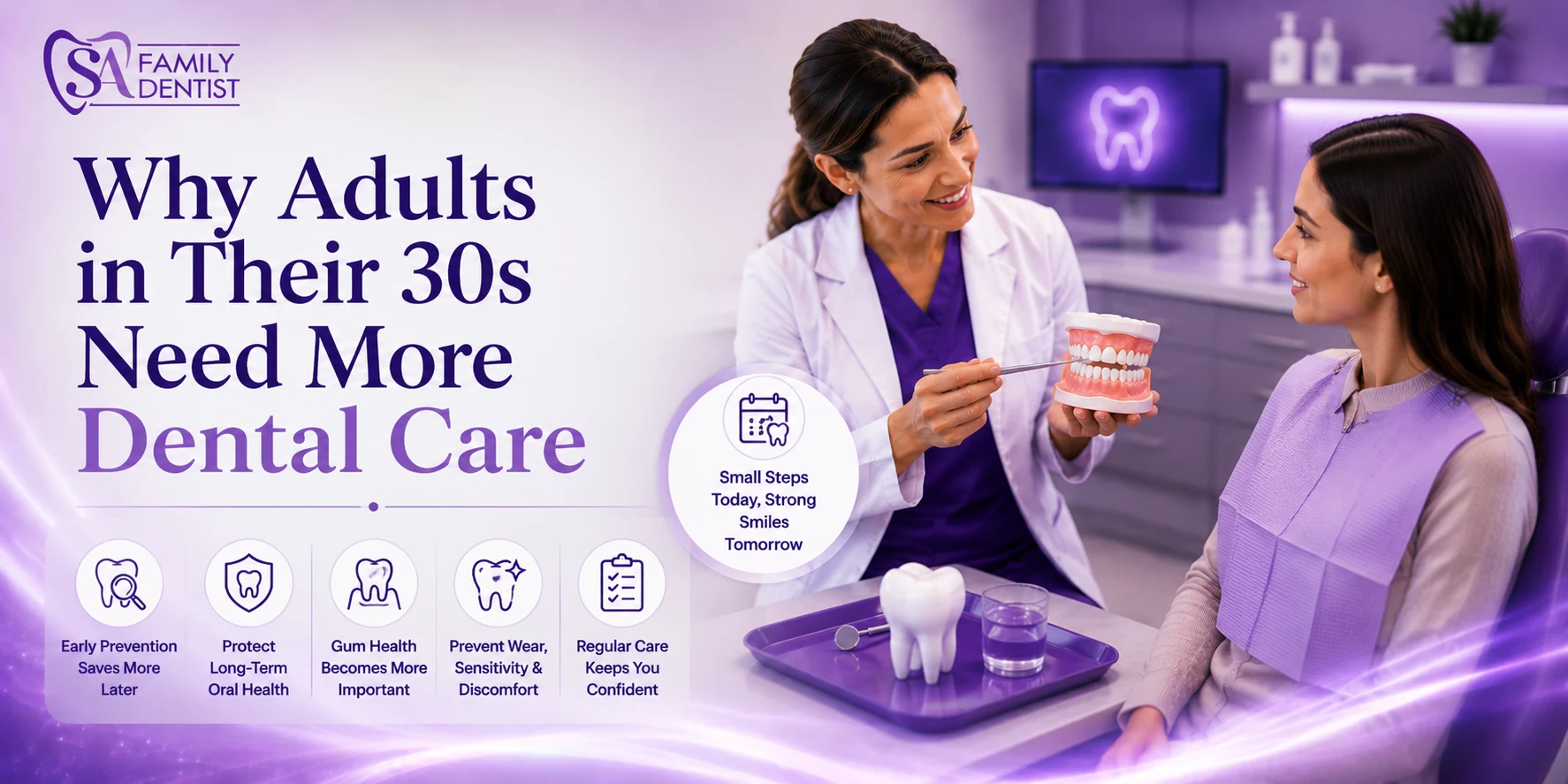
There’s a pattern showing up in dental offices across the country. People walk in somewhere between 32 and 38, haven’t had a cleaning in a few years, and leave with a treatment plan they weren’t expecting. Cavities on teeth that survived childhood fine. Gum inflammation that snuck in quietly. Grinding damage that’s been building since their mid-20s. If you’ve been putting off general dentistry in San Antonio and wondering whether it can wait a little longer, this article is going to make that decision harder.
The Myth Of The Stable Adult Mouth
Most people carry a mental model that goes something like this: childhood is when you get cavities, braces, all the big dental drama. Adulthood is when things stabilise. You brush, you floss occasionally, you’re fine.
That model isn’t wrong exactly. It’s just incomplete.
The adult mouth doesn’t stop changing at 25. Gum tissue shifts. Old fillings, the silver amalgam ones placed in childhood or adolescence, have a lifespan. The bone supporting your teeth responds to stress, grinding, and gum disease in ways that accumulate slowly and become visible on X-rays before they become visible in the mirror.
Your 30s aren’t a stable plateau. They’re when the decisions made in your 20s start showing up as findings.
What’s Actually Driving The Increase
Sleep And Stress Took Over In Your 20s
Bruxism, teeth grinding, has a well-documented relationship with stress and poor sleep. The American Dental Association notes that stress is one of the most common triggers for nighttime grinding. Most people in their 20s are carrying a significant stress load: new careers, financial pressure, poor sleep habits, inconsistent routines.
The grinding happens at night, silently. By the time someone hits 33 or 35, the cumulative wear is measurable. Molars have flattened. Front teeth have shortened. Sometimes the jaw joint is involved. None of it hurt enough to prompt a visit. Until it did.
Old Dental Work Has An Expiration Date
Composite fillings placed in childhood typically last 7 to 10 years. Amalgam fillings last longer but eventually crack, and the tooth around them can fracture in ways that need crowns to fix. If your last major dental work was done in your teens, the math says some of it is due for evaluation right now.
This is one of the more predictable reasons adults in their 30s end up with treatment plans. The work that held for 15 years just stopped holding. Not a failure, an expiration.
Gum Disease Doesn’t Announce Itself Early
Periodontal disease begins as gingivitis: gum inflammation caused by bacterial plaque buildup along the gumline. In early stages, gums bleed a little when brushing. Many people notice and dismiss it. It doesn’t hurt. Life is busy.
Left alone, gingivitis progresses. The bacteria move below the gumline. The bone supporting the teeth starts eroding. By the time periodontitis, advanced gum disease, becomes symptomatic, it has typically been progressing for years. The CDC estimates that nearly half of adults over 30 have some form of periodontal disease.
That number isn’t alarming because the condition is rare. It’s alarming because it’s that common and that quiet.
The Skipped-Years Problem
One more factor that doesn’t get talked about enough: a lot of adults in their 30s haven’t had consistent dental care since their parents stopped scheduling it. The late teens and 20s are statistically the lowest-attendance years for dental visits across all age groups.
What that means practically:
- Small cavities that would have been caught in a routine cleaning grew for three or four years before anyone saw them
- Early gum inflammation that responds well to a professional cleaning became established gum disease instead
- Grinding damage that a nightguard would have stopped kept compounding
- Cracked fillings that needed replacing a few years ago now need crowns or more
Skipping two years of cleanings doesn’t just mean two years of buildup. It means two years of problems developing without detection.
What A Routine Visit Actually Catches?
This is worth spelling out because most people underestimate what a cleaning and exam involves.
A standard visit to a provider offering general dentistry in San Antonio includes:
- X-rays that show decay between teeth, under old fillings, and around roots, none of which is visible to the naked eye
- Periodontal probing to measure gum attachment and detect early bone loss
- Screening for oral cancer, which is most treatable when caught early
- Assessment of existing restorations, which fillings are holding, which are showing stress fractures
- Bite and grinding evaluation
That’s not a cleaning. That’s a diagnostic pass across everything happening in your mouth. Most of the treatment that comes out of it is intercepted early precisely because someone looked.
The Cost Of One More Year Of Waiting
People delay dental care for understandable reasons. Cost, anxiety, time, the feeling that nothing is hurting so nothing is wrong. But the economic logic of waiting is actually backwards.
A cavity caught early is a filling. A cavity caught after it reaches the pulp is a root canal and a crown. Gingivitis treated with a professional cleaning is resolved in one or two visits. Periodontitis with bone loss requires deep cleaning procedures and ongoing maintenance. The dollar difference between early and late is significant in every case.
One more year of waiting doesn’t just defer the problem. It makes the problem larger.
This Is The Decade That Decides The Next Two
The dental health you establish in your 30s sets the trajectory for your 40s, 50s, and beyond. People who get consistent with cleanings and treatment in this decade generally have far fewer major interventions later. People who stay away compound whatever is already developing.
That’s not meant as pressure. It’s just the clinical pattern, repeated across millions of patients.
At SA Family Dentist, general dentistry in San Antonio means routine care that actually catches what’s there, not a quick polish and out the door. If your 20s were years of skipping appointments, your 30s are a reasonable place to course-correct.
Book a cleaning and exam with SA Family Dentist. Find out where things actually stand before the next year adds to the list.
FAQs
1. Why do many adults need more dental treatment in their 30s?
Several factors can contribute, including ageing dental restorations, teeth grinding, early gum disease, lifestyle changes, and missed routine dental visits. Many dental issues develop gradually and only become noticeable after several years.
2. How often should adults have a dental check-up?
Most people benefit from regular dental examinations and professional cleanings every six months, although your dentist may recommend a different schedule based on your oral health needs and risk factors.
3. Can old fillings wear out over time?
Yes. Fillings can wear, crack, or loosen after years of use. Regular dental check-ups help identify ageing restorations before they lead to more extensive damage or tooth decay.
4. What are the early signs of gum disease?
Common early signs include bleeding gums when brushing or flossing, redness, swelling, persistent bad breath, and gum tenderness. Early treatment can often prevent the condition from progressing.
5. Why are regular dental check-ups important even if nothing hurts?
Many dental problems, such as cavities, gum disease, worn fillings, and teeth grinding, can develop without causing pain in the early stages. Routine examinations allow these issues to be detected and treated before they become more complex.