
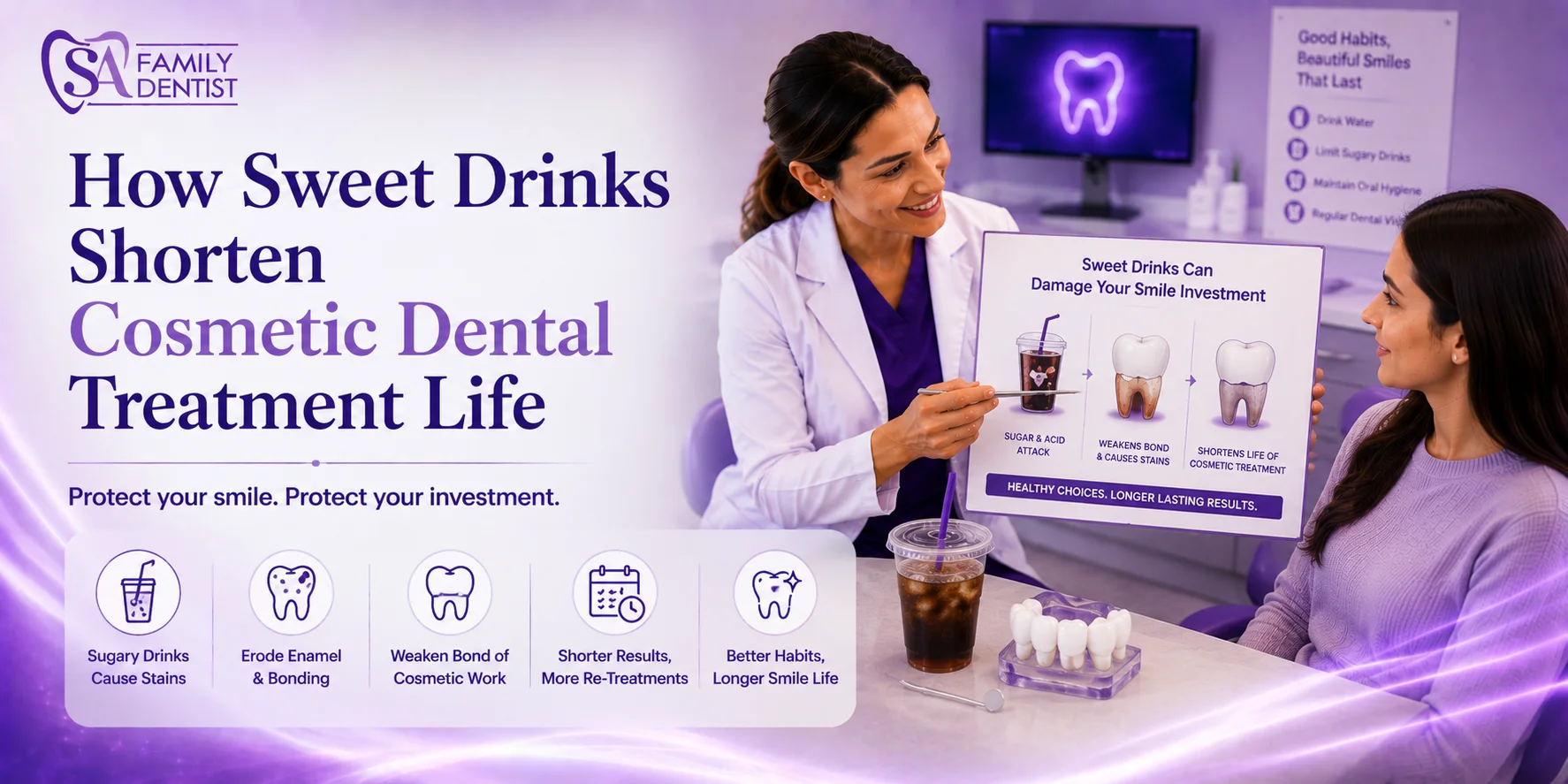
San Antonio runs on sweet tea. It’s at every drive-through, every family table, every lunch spot from the North Side to the South Side. Sports drinks aren’t far behind, sidelines, school lunches, post-gym parking lots. Neither feels like a dental decision. Both absolutely are. If you’ve invested in cosmetic dental work or you’re planning to, understanding what these beverages do to restorations over time is the kind of information the best cosmetic dentist in San Antonio TX should be sharing before treatment, not after something starts failing.
What Cosmetic Dental Work Is Actually Made Of
Before getting into what damages it, it’s worth being clear about what you’re protecting.
Porcelain veneers are thin ceramic shells bonded to the front surface of teeth. Composite bonding is a tooth-colored resin applied and hardened directly on the tooth. Dental crowns can be porcelain, zirconia, or porcelain-fused-to-metal. Teeth whitening treatments alter the surface colour of natural enamel.
Each of these materials has a different relationship with acid, sugar, and staining compounds. None of them is immune to daily beverage habits. And because cosmetic work is an investment that’s supposed to last 10 to 20 years with proper care, the habits around it matter more than most patients are told.
What Sweet Tea Does Specifically
Sweet tea is a double problem. The sugar content and the acidity work independently to cause different kinds of damage, and most people drink it in a pattern, sipping throughout a meal, keeping a cup going for an hour or two, that maximises exposure time rather than minimising it.
The Acid Component
Brewed tea, particularly black tea, has a pH between 4.9 and 5.5 depending on strength and brew time. Neutral pH is 7.0. Enamel begins to demineralise at pH 5.5. That means sweet tea sits right at or below the threshold where repeated exposure softens enamel over time.
For natural teeth, demineralised enamel is harder to re-harden and more vulnerable to decay. For cosmetic restorations, the concern is different. Acid degrades the bonding agents that hold composite restorations and veneers in place. Over time, prolonged acid exposure can weaken the margin, the edge where the restoration meets the tooth, creating micro-gaps where bacteria enter and secondary decay begins underneath the cosmetic work.
The Sugar Component
Sugar feeds the bacteria that produce acid as a byproduct. So sweet tea creates an acidic environment in two ways: the tea itself is acidic, and the sugar it contains feeds bacteria that produce additional acid. Sipping it over an extended period keeps that acid cycle running continuously rather than allowing the mouth’s natural buffering systems, primarily saliva, to neutralise between exposures.
What Sports Drinks Do Specifically
Sports drinks are marketed around athletic performance. The reality is that most people consuming them are not replacing electrolytes lost during intense exertion, they’re drinking them at their desk, during a school lunch, or because they prefer the taste to water.
The pH of major sports drink brands typically falls between 2.9 and 3.7. That’s significantly more acidic than sweet tea, more acidic than coffee, and more acidic than orange juice. For context, battery acid sits around pH 1. Sports drinks are nowhere near that extreme, but at 3.0, they’re aggressive enough that regular daily exposure does measurable enamel damage over months and years.
For cosmetic dental work specifically:
- Composite bonding is more porous than porcelain. Acidic beverages gradually degrade its surface over time, dulling the finish and making it more susceptible to staining.
- Porcelain veneers are more acid-resistant than composite, but their bonding margins are not. Daily acid exposure weakens the adhesive interface at the edges.
- Teeth whitening results fade faster with regular consumption of highly chromogenic and acidic beverages. The whitening effect on natural enamel is temporary by design, it requires maintenance. Acidic beverage habits accelerate the timeline significantly.
- Crowns made from porcelain or zirconia are themselves durable, but the tooth structure they’re anchored to and the cement used to hold them can both be affected by sustained acid exposure over years.
The Frequency And Pattern Problem
One sweet tea with dinner isn’t the concern. Daily sweet tea from 11 am to 3 pm, which is a realistic description of how a lot of people in San Antonio consume it, is a different story.
The mouth has a recovery window. After an acidic exposure, saliva works to neutralise the pH and begin remineralising enamel. That process takes roughly 20 to 30 minutes. Sipping an acidic beverage over two hours keeps the oral environment acidic for the entire duration, eliminating the recovery window entirely.
This is the pattern that shortens the life of cosmetic work, not the beverage in isolation, but the way it’s consumed.
Practical Adjustments That Actually Work
The goal isn’t to eliminate every enjoyable beverage. It’s to protect the investment. A few specific changes make a meaningful difference:
- Use a straw and position it toward the back of the mouth. This reduces direct contact between the beverage and front teeth where veneers and bonding typically sit.
- Limit the sipping window. Drink it with a meal rather than over several hours. The meal itself stimulates saliva production that helps buffer acid.
- Rinse with water after. A simple rinse within a few minutes of finishing an acidic drink helps clear residual sugar and acid from tooth surfaces. Don’t brush immediately, enamel is softened right after acid exposure, and brushing can abrade it.
- Time your fluoride exposure. Using a fluoride toothpaste consistently helps support remineralisation between exposures.
- Ask your provider about maintenance intervals. Cosmetic work often benefits from more frequent check-ins than twice a year, particularly if daily beverage habits are a factor.
What This Conversation Looks Like At The Right Practice
The best cosmetic dentist in San Antonio TX isn’t just technically skilled at placing veneers or bonding. They’re the provider who has the beverage conversation before treatment starts, who builds a realistic picture of your daily habits and tells you honestly what they mean for the longevity of the work being planned.
At SA Family Dentist, cosmetic treatment planning includes the kind of practical guidance that helps results last. If you’re investing in your smile, the conversation about protecting it belongs at the start.
Book a cosmetic consultation at SA Family Dentist and find out what protecting your results actually looks like for your lifestyle.
FAQs
1. Can sweet tea stain cosmetic dental treatments?
Yes. Sweet tea contains tannins that can contribute to staining, particularly on composite bonding. While porcelain veneers are more stain-resistant, regular consumption of dark-coloured beverages may still affect their appearance over time, especially around the edges.
2. Are sports drinks harmful to veneers and dental bonding?
Frequent consumption of sports drinks can expose cosmetic restorations to acidic conditions that may weaken bonding materials over time. They can also increase the risk of decay around the margins of restorations if good oral hygiene is not maintained.
3. How can I protect my cosmetic dental work when drinking acidic beverages?
Using a straw, drinking acidic beverages with meals instead of sipping them over long periods, rinsing your mouth with water afterwards, and maintaining regular dental check-ups can all help protect your cosmetic dental treatments.
4. Does teeth whitening last longer if I avoid sugary and acidic drinks?
Yes. Limiting beverages such as sweet tea, sports drinks, coffee, and red wine can help maintain whitening results for longer by reducing staining and minimising enamel exposure to acids.
5. How often should cosmetic dental restorations be checked?
Regular dental examinations, usually every six months or as recommended by your dentist, allow cosmetic restorations to be monitored for wear, staining, or changes around the margins, helping to keep them looking and functioning their best.