
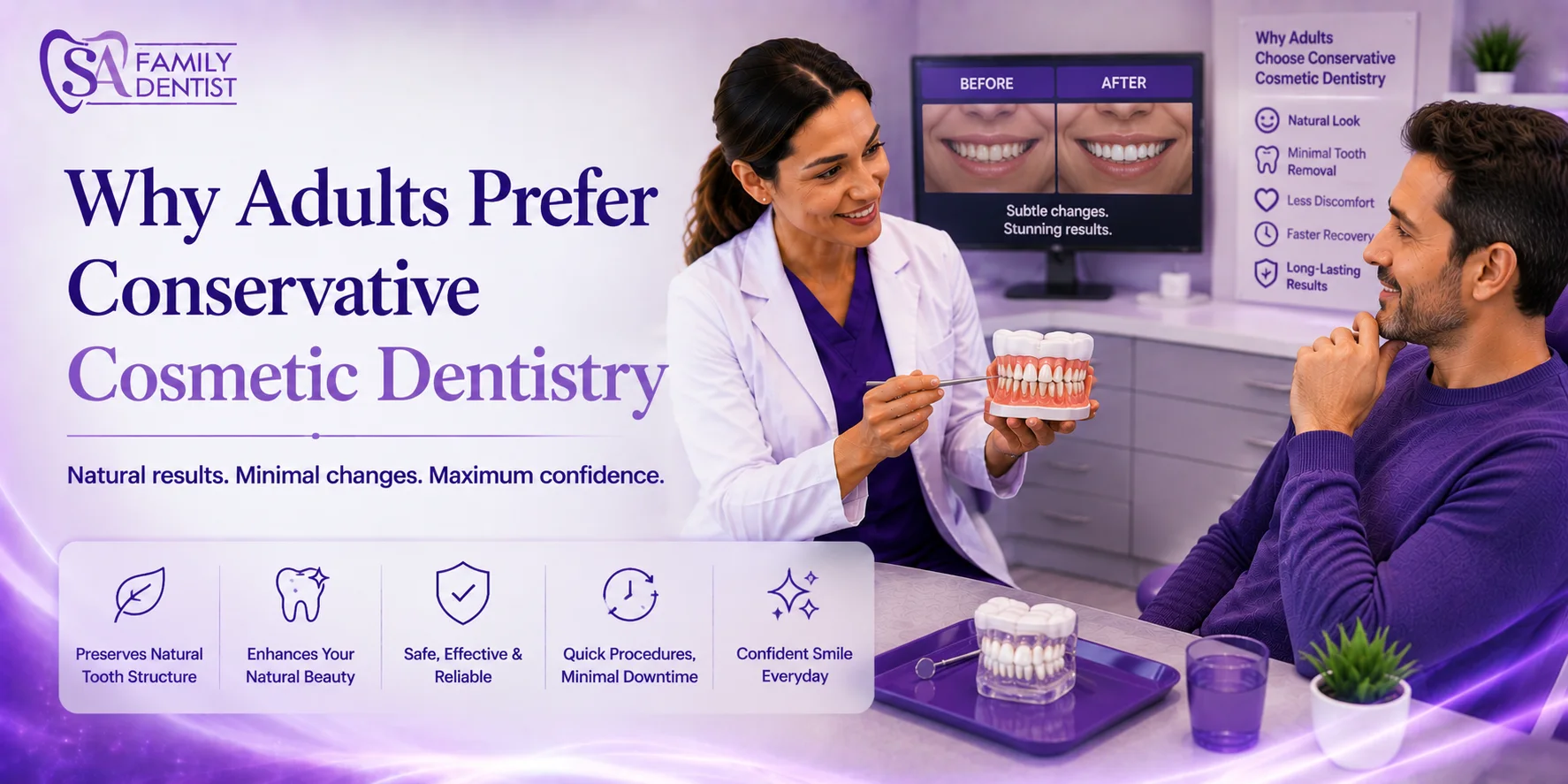
Veneers have been the headline option in cosmetic dentistry for decades. Celebrity smiles, dramatic before-and-afters, the full transformation. The pitch is compelling. But a growing number of adults walking into cosmetic consultations are asking a different question: is there a way to improve my smile without permanently altering healthy tooth structure?
Increasingly, the answer is yes, and the options are better than most people realise. When you search for the best cosmetic dentist nearby, the conversation has shifted. Conservative is no longer a compromise. For a lot of patients, it’s the better call.
What “Conservative” Actually Means In This Context
Conservative cosmetic dentistry is a clinical philosophy before it’s a treatment category. The core principle: don’t remove or alter healthy tooth structure unless there’s a clinical reason to do so.
Traditional porcelain veneers require enamel reduction. The front surface of each tooth gets shaved down, sometimes minimally, sometimes more substantially, to create space for the veneer to sit flush. That process is irreversible. Once the enamel is gone, the tooth requires a restoration for life. The veneer itself lasts 10 to 20 years; after that, it gets replaced with another veneer, then another.
That’s not a disqualifying fact. For some patients, veneers are the right answer, the tooth already has damaged enamel, or the cosmetic correction needed simply can’t be achieved any other way. But for patients with healthy enamel who want aesthetic improvement, permanently altering that enamel is a significant trade-off that deserves a direct conversation before treatment starts.
Conservative options avoid or minimise that trade-off.
The Treatments Driving The Shift
Composite Bonding
Composite bonding uses a tooth-colored resin applied directly to the tooth surface, shaped and polished to correct chips, gaps, discolouration, or minor irregularities. No drilling, no enamel removal in most cases. The procedure is reversible and can be adjusted or redone over time as aesthetic preferences change.
It’s not as durable as porcelain, bonding typically lasts 5 to 7 years before it needs refinishing or replacement. But for a patient in their 30s who wants to close a gap or correct a chip without committing to a lifetime of veneer replacements, that trade-off looks different than it did a generation ago.
Bonding has also improved significantly. Modern composite materials hold their color better and polish to a finish that closely approximates natural enamel. The result, in skilled hands, is difficult to distinguish from a more invasive restoration.
Teeth Whitening Done Right
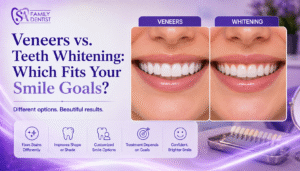
Professional whitening is the most conservative cosmetic intervention that exists. No alteration, no removal, no bonding. The natural tooth enamel is bleached to a lighter shade using a peroxide-based agent, either in-office or with custom trays dispensed by a dental provider.
The limitation is that whitening only works on natural enamel, it won’t change the shade of existing crowns, veneers, or bonding. And results require maintenance. But for patients whose primary concern is discoloration rather than shape, whitening first is the logical starting point. It’s the approach a best cosmetic dentist nearby recommends before recommending anything more involved.
Minimal-Prep And No-Prep Veneers
For patients who do want veneers but want to preserve as much enamel as possible, minimal-prep and no-prep options exist. These use ultra-thin porcelain, sometimes as thin as 0.3 millimeters, that can be bonded to the tooth with little to no enamel reduction, depending on the patient’s existing tooth size and bite.
Not every patient is a candidate. The approach requires enough tooth surface to support bonding and a bite that doesn’t create excessive pressure on the veneers. But for appropriate candidates, it delivers the durability and aesthetic of traditional veneers with a fraction of the structural trade-off.
Why Patient Thinking Has Changed
The shift toward conservative options isn’t just about clinical philosophy. It reflects a broader change in how adults approach cosmetic decisions.
A generation ago, the goal of cosmetic dentistry was often a uniform, porcelain-white Hollywood result. That look required veneers across multiple teeth. It was also visually distinctive in a way that’s now slightly out of step with what many patients want.
Current aesthetic preferences run toward natural-looking improvements. Teeth that look like a better version of the patient’s own teeth, not a replacement set. That preference aligns well with conservative approaches, where the outcome is shaped by what’s already there rather than replacing it wholesale.
There’s also a longer-term awareness that wasn’t common in cosmetic consultations 20 years ago. Adults in their 30s and 40s are thinking about what a decision looks like at 55 or 65, not just next year. A reversible bonding procedure that can be adjusted as their face and preferences change looks different from an irreversible enamel reduction that commits them to veneers for life.
The Consultation Question That Changes Everything
One question separates a genuinely conservative cosmetic consultation from a cosmetic consultation that just offers more options.
It’s this: “What’s the least invasive approach that gets you to the result you’re looking for?”
A provider who leads with that question, and means it, is approaching your teeth as something to protect, not just a surface to work on. The treatment plan that comes out of that conversation is built around what you actually need, not what generates the most work.
Conservative Doesn’t Mean Settling
The phrase “conservative cosmetic dentistry” can sound like the option for people who can’t afford the real thing. That framing is wrong. For many patients, conservative treatment produces results that are clinically equivalent to more invasive options, with fewer trade-offs, lower long-term commitment, and a smile that still looks like theirs.
At SA Family Dentist, cosmetic consultations start with what you’re trying to achieve and work backward to the simplest approach that gets you there. If you’ve been looking for a best cosmetic dentist nearby who takes that question seriously, that’s the conversation worth having.
Book a cosmetic consultation at SA Family Dentist. Find out what’s actually possible before deciding how far to go.
FAQs
1. What is conservative cosmetic dentistry?
Conservative cosmetic dentistry focuses on improving the appearance of your smile while preserving as much healthy natural tooth structure as possible. Treatments may include professional teeth whitening, composite bonding, or minimal-preparation veneers, depending on your needs.
2. Is composite bonding a good alternative to veneers?
For many patients, yes. Composite bonding can repair small chips, close gaps, and improve the shape of teeth with little or no removal of healthy enamel. Your dentist can advise whether bonding or veneers is more suitable for your goals.
3. Do all veneers require enamel to be removed?
No. While traditional veneers usually require some enamel reduction, certain patients may be suitable for minimal-prep or no-prep veneers. Eligibility depends on factors such as tooth alignment, bite, and the desired cosmetic result.
4. Can professional teeth whitening improve my smile without veneers?
Yes. If your main concern is tooth colour rather than shape or alignment, professional teeth whitening may provide the improvement you’re looking for without altering the natural tooth structure.
5. How do I know which cosmetic dental treatment is right for me?
A cosmetic consultation allows your dentist to assess your oral health, discuss your smile goals, and explain the least invasive treatment options that can achieve your desired outcome. The best choice depends on your teeth, expectations, and long-term oral health.