
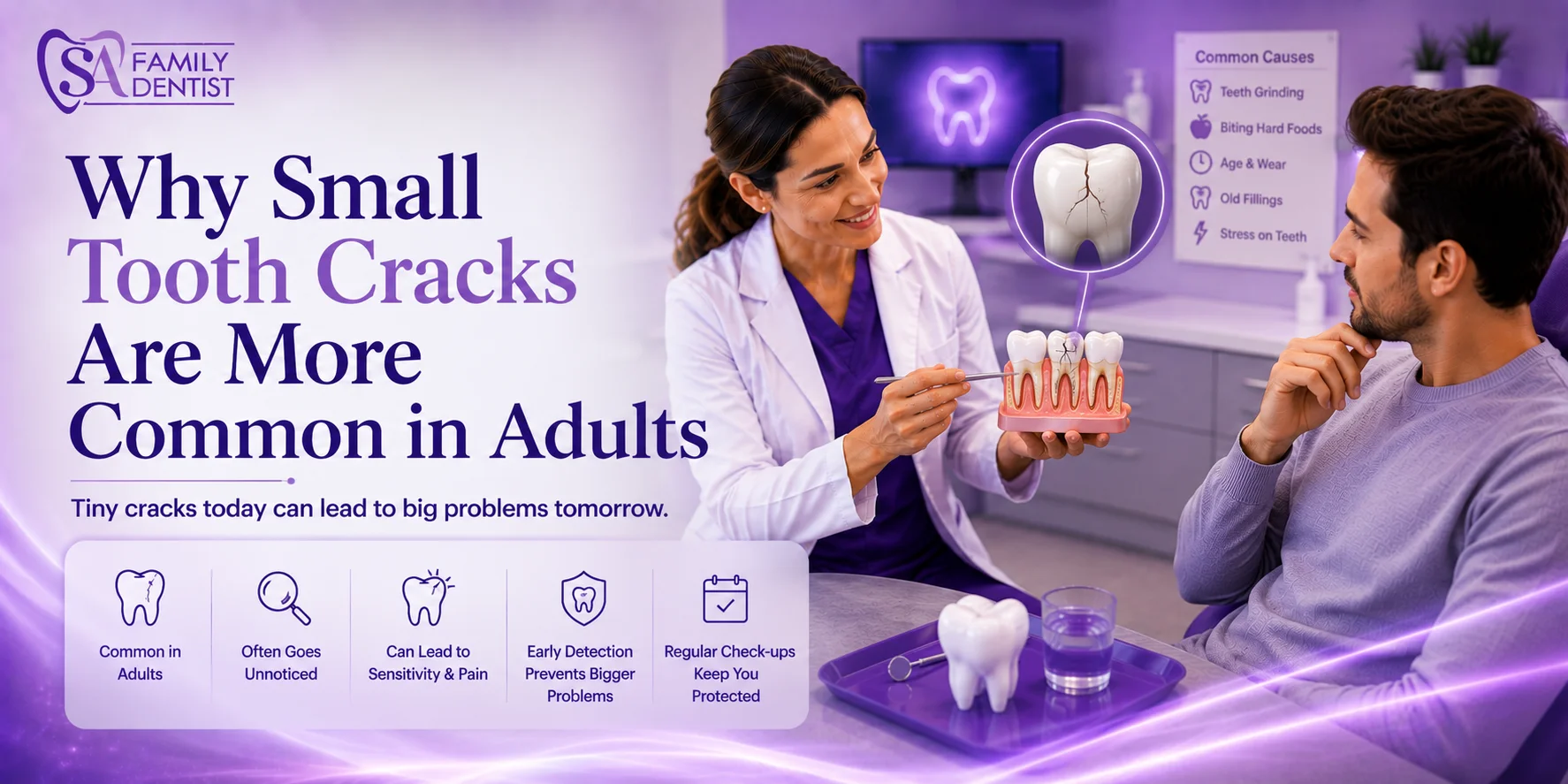
Most people don’t find out they have a cracked tooth from pain. They find out because a dentist mentions it during a routine exam, or because a bite on something ordinary, a piece of bread, a fork, sends a sharp jolt that wasn’t there the week before. Small tooth cracks are quietly one of the more common findings in adult dental care right now, and the reasons behind the rise aren’t complicated. They’re just not talked about enough. Understanding what’s driving this matters whether you’re considering general dentistry or looking for an emergency dentistry provider for something more urgent.
Cracks Don’t Always Look Like Cracks
The technical term is cracked tooth syndrome. It’s tricky to diagnose precisely because small fractures, called craze lines or incomplete fractures, don’t show up on standard X-rays. The crack has to be significant enough to affect function before imaging catches it. What dentists rely on instead is patient history, bite testing, and visual inspection under magnification and special lighting.
What this means practically: a crack can exist for months before anyone identifies it. It can cause inconsistent, hard-to-describe symptoms, pain only when biting in a specific direction, sensitivity that comes and goes, a vague soreness that never quite turns into something acute. Patients dismiss it. Sometimes providers miss it on the first exam.
By the time a crack announces itself clearly, it has often propagated further than it started.
What’s Actually Driving More Cracks In Adults
Pandemic-Era Stress Never Fully Unwound
The data on bruxism, nighttime teeth grinding, shifted noticeably during and after 2020. Multiple surveys of dental professionals reported significant increases in patients presenting with grinding-related damage, cracked teeth, and jaw pain in the years following the onset of widespread pandemic stress.
Grinding puts enormous force on teeth. The average person exerts around 150 to 200 pounds of bite force during normal chewing. During bruxism, that force can exceed 250 pounds, concentrated on the same surfaces, repeatedly, through the night. Teeth aren’t designed for that load on that schedule. Small cracks develop in the enamel first, then work their way deeper.
Stress levels in adults have remained elevated. The grinding patterns that started in 2020 haven’t stopped for most people who developed them.
Old Dental Work Is Reaching Its Structural Limit
Silver amalgam fillings placed 15 to 25 years ago were built to last. And they did. But amalgam expands and contracts with temperature changes differently than natural tooth structure. Over decades, that differential movement creates stress inside the tooth. The surrounding enamel develops micro-fractures that compound over time.
This isn’t a design flaw. It’s physics and time doing what they do. Adults in their 40s and 50s who had significant dental work done in childhood or adolescence are now seeing those restorations reach the end of their functional life, and the teeth around them showing the structural consequences.
Hydration Habits And Diet Have Changed
Acidic beverages, sparkling water, energy drinks, kombucha, and citrus-heavy smoothies have become daily habits for a large portion of American adults. Acid weakens enamel through a process called demineralisation. Weakened enamel is less resistant to fracture under bite pressure.
The problem isn’t acute, one sparkling water doesn’t crack a tooth. But daily acidic beverage consumption over years, combined with inadequate hydration with plain water, creates enamel that fractures at lower thresholds than it should. Something a tooth would have handled fine at 28 causes a crack at 37.
Harder Foods, Less Awareness
Chewing ice, hard candies, popcorn kernels, crusty bread with pressure applied unevenly- none of these is new foods. What’s changed is that adults with compromised enamel or ageing restorations are applying the same habits to teeth with less structural reserve than they had a decade ago. The food didn’t change. The tooth’s capacity to handle it did.
The Crack Progression Problem
Small cracks don’t stay small by default. Every bite applies force to the fracture line. Whether a crack progresses depends on its depth, location, direction, and how much load the tooth takes daily.
Here’s where the clinical stakes get real:
- A crack confined to enamel is a cosmetic finding. Monitoring and possibly bonding are the response.
- A crack that reaches dentin causes sensitivity and needs a crown to protect the remaining structure.
- A crack that reaches the pulp, the nerve tissue, requires emergency dentistry intervention and likely a root canal before the crown can be placed.
- A crack that extends below the gumline into the root often means the tooth can’t be saved.
The window between the first two outcomes and the last two is not predictable from the outside. It’s a function of how long the crack has been there and how it has been loaded. Which is exactly why early detection matters.
What A Crack Exam Actually Involves
Identifying a crack properly requires more than a visual check. A thorough evaluation at a practice offering general dentistry and emergency dentistry under one roof typically includes:
- Bite sticks to isolate which cusp or surface is symptomatic
- Transillumination, a focused light that passes through healthy tooth structure but stops at fracture lines
- Magnified visual inspection with loupes or a dental microscope
- Periodontal probing around the affected tooth to check if the crack has reached the root
- X-rays to rule out infection or root involvement
None of this is elaborate. It’s a targeted diagnostic pass that takes less time than most people expect and gives the provider a clear answer about depth and next steps.
Don’t Wait For The Pain To Make The Decision For You
At SA Family Dentist, both general dentistry and emergency dentistry services are available across their San Antonio locations, which matters when a cracked tooth goes from a monitoring situation to an urgent one without much warning. If you’ve noticed sensitivity, an occasional sharp pain on biting, or a tooth that feels different but doesn’t quite hurt, that’s a clinical finding worth investigating now.
Book an exam at SA Family Dentist before a small crack becomes a bigger conversation.
FAQs
1. What are the early signs of a cracked tooth?
Early symptoms may include sharp pain when biting or releasing pressure, sensitivity to hot or cold foods and drinks, discomfort that comes and goes, or a feeling that something is different when chewing. Some small cracks cause no symptoms at all.
2. Can a small tooth crack heal on its own?
No. Teeth cannot repair cracks naturally. While a minor crack may remain stable for some time, it should be monitored by a dentist to reduce the risk of it becoming larger or affecting the tooth’s inner structure.
3. What causes tooth cracks in adults?
Common causes include teeth grinding, ageing dental restorations, biting hard foods, chewing ice, accidental trauma, and weakened enamel from years of wear or acidic food and drink consumption.
4. How are cracked teeth diagnosed?
A dentist may use a combination of visual examination, bite tests, specialised lighting, magnification, periodontal probing, and dental X-rays to determine the location and severity of the crack and recommend appropriate treatment.
5. When should I seek emergency dental care for a cracked tooth?
You should seek prompt dental care if the crack causes severe pain, swelling, persistent sensitivity, difficulty chewing, or if a large piece of the tooth has broken away. Early treatment can improve the chances of saving the tooth.