

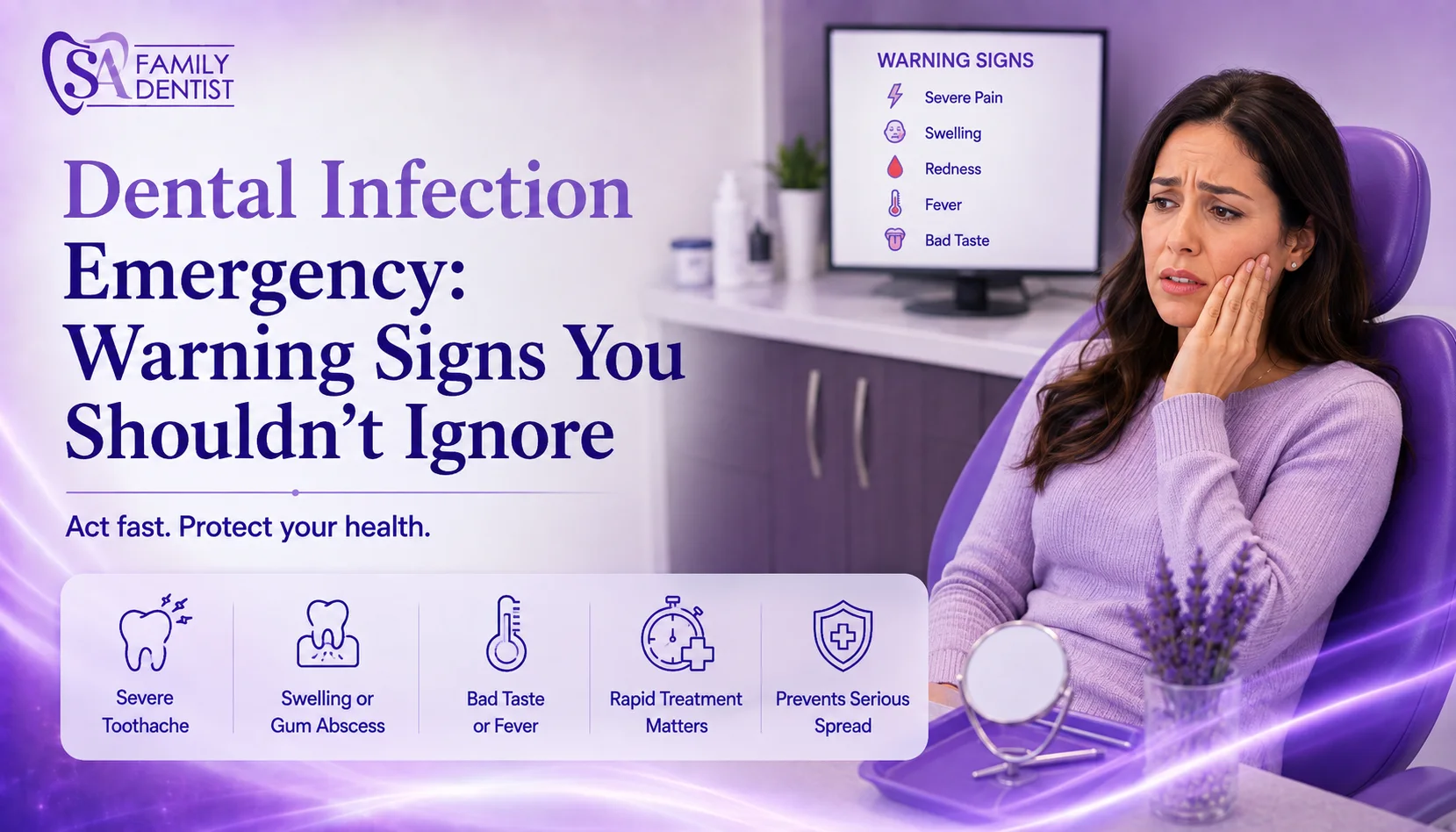
It is easy to push off a dull toothache when life gets busy. You might take a pain reliever, stick to soft foods, and hope the discomfort goes away on its own. However, an untreated toothache is often a sign of a deeper problem brewing beneath the surface: an active bacterial infection.
Unlike a minor cold, a bacterial dental infection will not clear up on its own. Left unmanaged, what starts as localized pain can escalate into a severe health issue. Recognizing the warning signs early helps you know when it is time to contact an emergency dentist in San Antonio before complications grow serious.
How a Simple Cavity Turns Into a Deep Infection
A tooth infection usually starts small. Here is how a minor issue transforms into an urgent situation:
- Enamel Breakdown: Bacteria eat through the protective enamel coating of your tooth, creating a cavity.
- Dentin Penetration: The decay reaches the sensitive dentin layer underneath, causing mild sensitivity to hot or cold foods.
- Pulp Contamination: Bacteria reach the innermost nerve center (the pulp), leading to sharp, lingering pain and inflammation.
- Abscess Formation: Infection spreads past the root tip into the jawbone, forming a pocket of pus known as a dental abscess.
Once an infection spreads past the tooth root into the surrounding bone and gum tissue, it becomes a time-sensitive medical concern.
Warning Signs That Require Immediate Care
Not every toothache requires a same-day visit, but specific symptoms indicate that an infection is spreading. You should seek help right away if you experience any of the following:
1. Severe, Throbbing Pain
Continuous, severe pain that radiates to your jawbone, neck, or ear is a clear indicator of high pressure and tissue swelling deep inside the tooth structure.
2. Facial or Jaw Swelling
Visible swelling in your cheeks, jawline, or nearby lymph nodes means the infection has crossed beyond the boundaries of the tooth and into surrounding soft tissues.
3. A Bump or Abscess on the Gums
A pimple-like bump on your gum line (often discharging foul-tasting fluid) indicates an active drainage path from an infected tooth root.
4. Difficulty Swallowing or Breathing
If facial or neck swelling starts to interfere with your ability to swallow, open your mouth fully, or breathe comfortably, this is a critical medical issue requiring immediate intervention.
5. Fever and General Malaise
A fever accompanied by chills, headache, or fatigue indicates that your body’s immune system is actively fighting a spreading bacterial infection.
Why You Should Never Wait Out a Dental Infection
Taking pain medication might temporarily dull the sensation, but it does not kill the bacteria causing the problem. In fact, if a severe toothache suddenly disappears on its own, it usually means the nerve inside the tooth has died. The underlying infection remains completely active and will continue to damage the surrounding bone tissue.
Prompt professional treatment stops the infection, removes the source of contamination, and protects your surrounding natural teeth and overall bodily health.
What Happens During an Emergency Dental Visit?
Visiting an emergency clinic for an infection is a straightforward, pain-relieving process focused entirely on your immediate comfort.
- Focused Diagnostic X-Rays: Fast digital imaging allows the doctor to locate the exact source and depth of the infection.
- Immediate Pain Relief: Gentle local numbing is administered right away to stop active pain completely.
- Infection Control: The dentist cleans out the infected area, drains any accumulated abscess, or prescribes targeted antibiotics if necessary.
- Treatment Plan: Clear, simple options are provided to permanently restore the tooth, such as a root canal or protective crown.
Protecting Your Long-Term Health
A dental infection is a signal that your mouth needs attention. Listening to your body and taking action at the first sign of unusual pain or swelling prevents small problems from turning into severe health risks.
Fast, Gentle Emergency Relief When You Need It
When an infection causes sudden pain or swelling, getting prompt care brings instant peace of mind. If you are searching for a reliable emergency dentist in San Antonio, SA Family Dentist offers same-day urgent care across three convenient locations on Braun Road, Nacogdoches Road, and Jackson Keller Road. Their gentle, experienced team is dedicated to stopping your pain, clearing away infections, and restoring your comfort in a calm and welcoming environment.
Frequently Asked Questions
1. Can a tooth infection go away on its own?
No. While pain might temporarily fade if the tooth nerve dies, the bacterial infection remains active in the bone and gums until professionally treated.
2. Can I take antibiotics to cure a tooth infection without seeing a dentist?
Antibiotics can help control the spread of bacteria throughout your body, but they cannot enter the dead inner chamber of a tooth. Physical treatment from a dentist is required to remove the source of the infection.
3. What should I do if my face starts swelling from a toothache?
Apply a cool compress to the outside of your cheek to help manage swelling, avoid hot liquids, and contact an emergency dental office right away for an immediate appointment.
4. Is a root canal painful during an emergency visit?
No. Modern local anesthetics fully numb the area before any work begins. The root canal procedure actually removes the infected tissue causing your pain, offering immediate relief.
5. What if I experience fever and difficulty swallowing from a tooth infection?
If swelling affects your airway or ability to swallow and you cannot reach a dental office immediately, seek emergency medical care at the nearest urgent care or emergency room right away.