
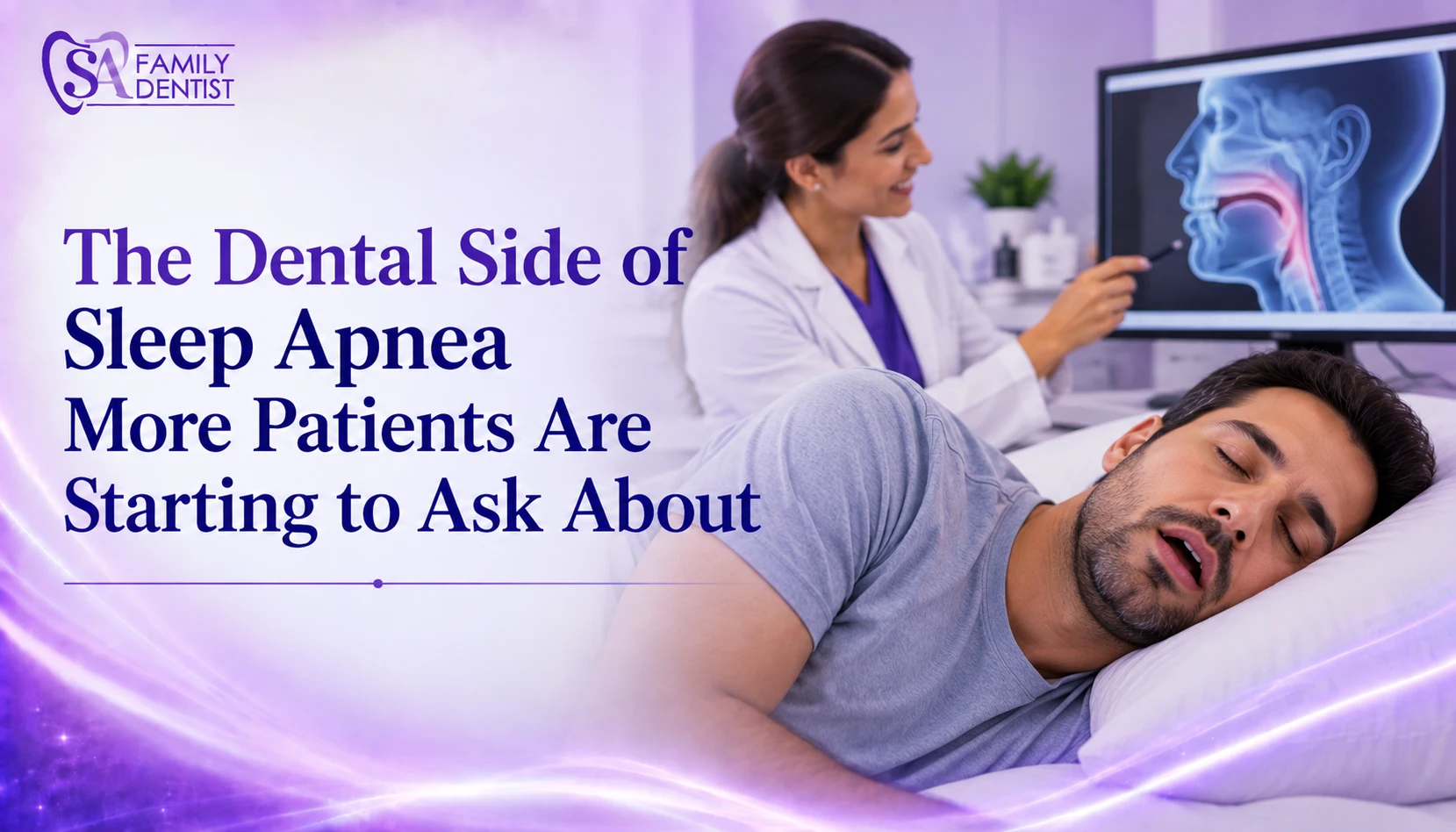
Sleep apnea may sound like a condition that belongs entirely in a physician’s office or sleep clinic. However, dentistry can also have a role in recognizing possible warning signs and, for some patients with a medical diagnosis, supporting treatment with an oral appliance. This is why a conversation with a general dentist in San Antonio may sometimes include questions about snoring, sleep quality or what happens in your mouth while you sleep.
The important distinction is simple: a dentist does not replace proper medical diagnosis of sleep apnea. Dental care can be one part of a broader approach.
Why Would Your Dentist Ask About Your Sleep?
Your dentist spends considerable time examining structures in and around your mouth. During routine care, certain findings or symptoms you mention may raise questions about sleep-related breathing.
For example, a patient might casually mention loud snoring or waking with a dry mouth. Someone else may complain about morning headaches or feeling tired despite spending enough hours in bed.
These symptoms do not prove that someone has sleep apnea. They can have other causes.
But they can be worth discussing rather than dismissing as simply “bad sleep.”
Snoring and Sleep Apnea Are Not the Same Thing
This is where confusion often begins.
Snoring occurs when tissues in the airway vibrate as air moves through during sleep. Many people snore without having obstructive sleep apnea.
With obstructive sleep apnea, the upper airway repeatedly becomes partially or completely blocked during sleep. These interruptions can reduce airflow and disturb normal sleep.
Possible warning signs include:
- Loud, frequent snoring
- Witnessed pauses in breathing
- Gasping or choking during sleep
- Excessive daytime sleepiness
- Morning headaches
- Difficulty concentrating
- Waking with a dry mouth
If a partner says you regularly stop breathing during sleep, that is not something to diagnose yourself. It deserves medical attention.
Where Does Dentistry Actually Fit In?
Think of the process as different professionals handling different parts of the problem.
A physician or qualified sleep specialist is responsible for evaluating and diagnosing sleep apnea. Sleep testing may be needed to determine whether the condition is present and how severe it is.
A general dentist in San Antonio with appropriate sleep-related dental services may become involved when oral appliance therapy is considered suitable for a diagnosed patient.
That separation matters. Snoring alone should not be treated as proof that you have sleep apnea.
What Is an Oral Appliance for Sleep Apnea?
An oral appliance is worn in the mouth during sleep. Certain appliances are designed to reposition the lower jaw and help maintain a more open upper airway.
They may look somewhat similar to a mouthguard, but they serve a different purpose and need to be appropriately selected and fitted.
Oral appliance therapy may be considered for certain adults with obstructive sleep apnea, depending on factors such as:
- The patient’s diagnosis
- Severity of the condition
- Medical recommendations
- Oral and dental health
- Jaw and tooth condition
- Ability to tolerate other treatment
It is not automatically the right option for every person with sleep apnea.
Why Not Just Buy a Snoring Device Online?
Because stopping a noise and treating a medical condition are not the same goal.
An over-the-counter product may be marketed for snoring, but sleep apnea requires proper evaluation. If someone assumes that reduced snoring means the underlying condition has been treated, important breathing interruptions could potentially remain unnoticed.
There is another dental consideration too.
A device that changes jaw position can affect the teeth, bite, jaw muscles or joints. That is one reason professionally managed oral appliance therapy involves dental assessment and follow-up rather than simply purchasing a device and wearing it indefinitely.
Your Teeth and Jaw Need to Be Considered
Before an oral appliance is used, the mouth itself needs attention.
A dentist may evaluate the teeth, gums, jaw movement and existing dental work to determine whether there are concerns that could affect appliance use.
Follow-up also matters because changes can occur over time.
Patients should mention symptoms such as:
- New jaw discomfort
- Tooth soreness
- Changes in the way the teeth meet
- Difficulty wearing the appliance
- Damage to the device
Working with a general dentist in San Antonio does not end when an appliance is fitted. Monitoring can be an important part of dental sleep care.
CPAP or an Oral Appliance: Is One Better?
There is no single answer for every patient.
Continuous positive airway pressure, commonly called CPAP, remains an important treatment for obstructive sleep apnea. Oral appliance therapy may be an alternative for certain patients, particularly when recommended as part of their individual treatment plan.
The decision should be based on diagnosis and clinical needs rather than convenience alone.
If CPAP is difficult to tolerate, do not simply stop using it and replace it yourself. Speak with the healthcare professional managing your sleep apnea about appropriate alternatives.
Start With the Right Conversation
If you snore occasionally but otherwise feel well, it does not automatically mean you have sleep apnea. On the other hand, persistent loud snoring combined with breathing pauses, gasping or significant daytime sleepiness should not be ignored.
Tell both your medical provider and dentist what you are experiencing. The dental and medical sides of sleep apnea can complement each other, but they have different responsibilities.
When Sleep and Dental Care Meet
A general dentist in san antonio can have a supporting role in sleep-related care, particularly when a diagnosed patient is being considered for an oral appliance.
SA Family Dentist provides sleep apnea treatment as part of its dental services in San Antonio. If you have already been diagnosed or want to discuss the dental side of sleep-related breathing concerns, the team can evaluate your oral health and explain available dental options where appropriate.
SA Family Dentist also has convenient locations in Braun, Nacogdoches, and Jackson Keller, making it easy to choose the office nearest to you for personalized dental implant care.
Frequently Asked Questions
1. Can a dentist diagnose sleep apnea?
A dentist may recognize possible warning signs and discuss them with you, but obstructive sleep apnea requires appropriate medical evaluation and diagnosis.
2. Can a dentist help with snoring?
Dental oral appliances may help certain patients with snoring or diagnosed obstructive sleep apnea, depending on their individual circumstances.
3. What does a sleep apnea oral appliance do?
Certain oral appliances reposition the lower jaw during sleep to help maintain an open upper airway.
4. Is an oral appliance better than CPAP?
Not necessarily. The appropriate treatment depends on the patient’s diagnosis, severity and individual clinical circumstances.
5. Should I tell my dentist that I have sleep apnea?
Yes. Tell your dentist about diagnosed sleep apnea, current treatment and any oral appliance you use, as this information may be relevant to your dental care.