
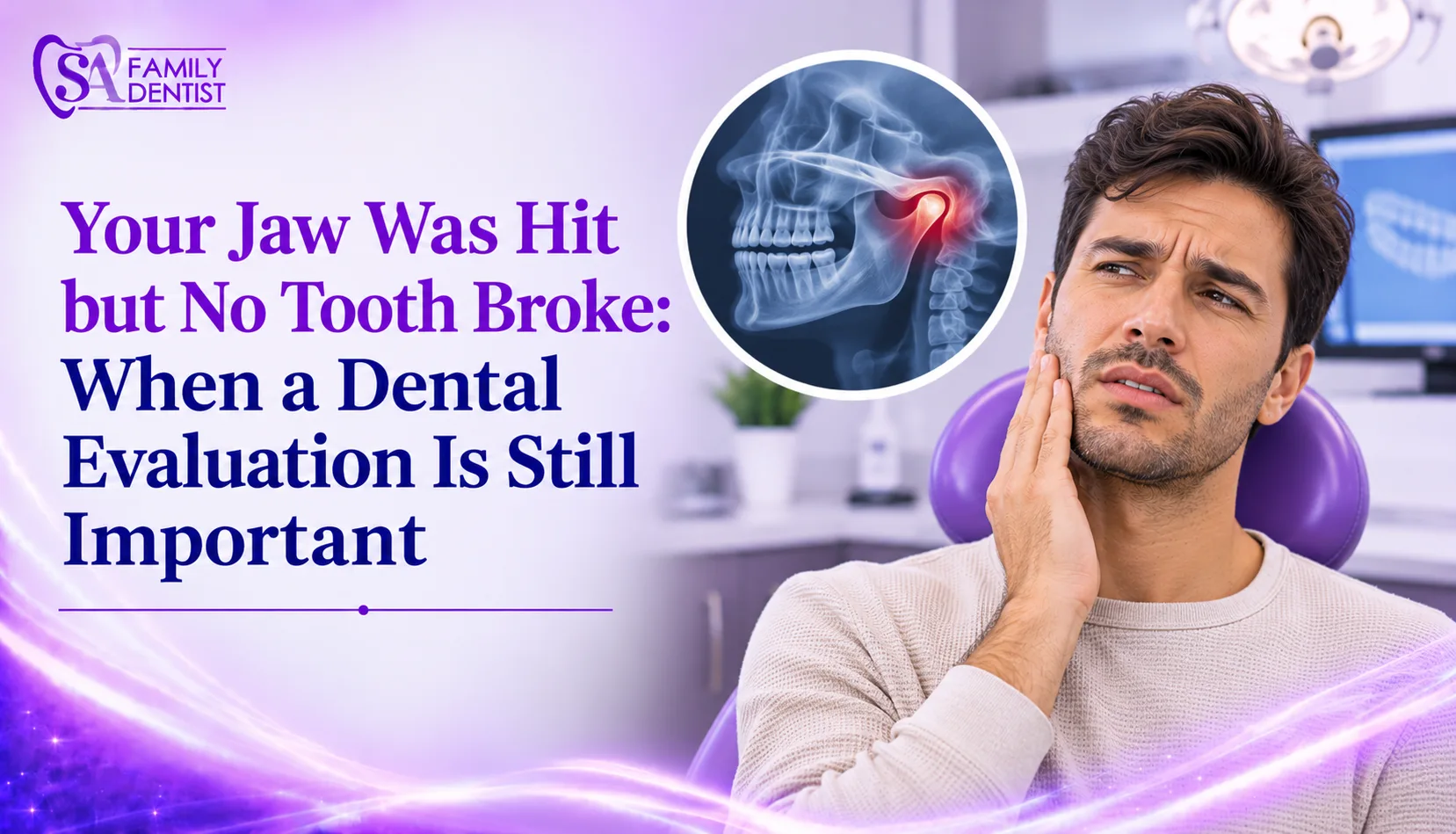
A basketball hits your chin, you slip and land on your jaw, or an accidental elbow catches you during a game. You check your teeth, find nothing broken, and assume the injury is minor. But a direct blow can affect the jaw joint, tooth roots, and surrounding tissues without leaving obvious damage. Searching for an emergency dentist near me might seem unnecessary when every tooth looks intact, yet some dental injuries are only identified through a professional examination.
Why a Jaw Injury Can Be Serious Even Without a Broken Tooth
Teeth are supported by roots, ligaments, and surrounding bone. A sudden impact can transfer force through these structures without producing a visible fracture.
The temporomandibular joints (TMJs), located near the ears, also absorb some of that force. Injuries to these joints may affect how comfortably the jaw opens, closes, and moves while chewing.
Possible problems include:
- Bruising or inflammation around the jaw joint
- Injury to the ligaments supporting a tooth
- Small cracks beneath the visible tooth surface
- Damage to the tooth’s internal nerves or blood supply
- Fractures affecting the jawbone
These conditions require different assessments. For example, persistent joint discomfort may require evaluation for temporomandibular joint problems, while tenderness around an individual tooth may suggest injury to its supporting structures.
The absence of visible damage does not establish that everything underneath is healthy.
Warning Signs After a Blow to the Jaw
Some discomfort immediately after an impact is expected. However, certain symptoms deserve particular attention.
Your Bite Feels Different
Try gently closing your mouth in its natural position. If the upper and lower teeth no longer meet as they normally do, stop testing your bite and seek immediate emergency medical assessment. A change in alignment can indicate a jaw fracture or displacement.
Opening Your Mouth Becomes Difficult
Pain near the ear, restricted movement, or difficulty opening the mouth may indicate joint or surrounding tissue injury. A jaw that appears locked or displaced needs prompt medical evaluation.
A Tooth Hurts When You Bite
An injured tooth may remain completely intact on the outside but become tender when pressure is applied.
Sometimes the damage involves the supporting ligaments. In other cases, a small fracture may be responsible. Understanding how cracked teeth develop and what symptoms they cause can help explain why discomfort is possible even when damage is difficult to see.
Numbness Develops Around the Chin or Lower Lip
Altered sensation after a jaw injury may indicate nerve involvement or an underlying fracture. It should be assessed urgently rather than monitored at home.
When Should You See an Emergency Dentist?
The urgency depends on the force of the impact and the symptoms that follow.
For mild tenderness without concerning symptoms, contact a dental office promptly for advice about an examination. Persistent pain, tooth sensitivity, or discomfort when chewing should not be ignored.
An emergency dentist near me search becomes especially relevant when a tooth feels loose, changes position, or becomes painful after an injury.
Patients can seek an emergency dentistry evaluation to determine whether the teeth and their supporting structures have been affected.
However, a dental clinic is not the appropriate first stop for every facial injury.
Go to an emergency department immediately if you experience:
- A noticeably altered bite or suspected broken jaw
- Difficulty breathing or swallowing
- Severe facial swelling or uncontrolled bleeding
- Significant difficulty opening or closing the mouth
- Loss of consciousness, confusion, repeated vomiting, or other concerning head injury symptoms
Understanding when to visit an emergency room instead of a dentist can help patients choose the appropriate level of care.
What Does a Dentist Check After a Jaw Injury?
The dentist will usually begin by asking how the injury occurred, where the impact landed, and whether symptoms appeared immediately or developed afterward.
A dental examination may include checking:
- Jaw movement: Whether opening, closing, or moving the jaw causes discomfort or restriction.
- Bite alignment: Whether the upper and lower teeth meet normally.
- Individual teeth: Whether any teeth are tender, loose, displaced, or unusually sensitive.
- Gums and surrounding tissues: Whether bruising, swelling, or bleeding suggests deeper injury.
Dental imaging: X-rays may help identify certain tooth and supporting-bone injuries. Suspected jaw fractures may require additional imaging and evaluation by an oral and maxillofacial specialist.
If you have searched for an emergency dentist near me following an accident, mention whether you experienced dizziness, loss of consciousness, or neck pain. These details may indicate the need for medical assessment beyond dental care.
Can Symptoms Appear Several Days After the Injury?
Yes. Not every dental injury produces immediate symptoms.
A tooth may initially feel normal but gradually become sensitive to temperature or pressure. In certain cases, trauma can affect the tooth’s pulp, which contains nerves and blood vessels.
Changes in tooth color, persistent pain, or swelling around the gum can develop later. Depending on the findings, root canal therapy may be necessary if the pulp becomes irreversibly damaged or infected. However, many injured teeth only require monitoring.
This is why follow-up appointments matter, even when the first examination does not identify a major problem.
Patients should also recognize dental warning signs that occur without significant pain. An absence of discomfort does not always mean that an injury has healed.
What Can You Do Before Your Dental Appointment?
If there are no emergency warning signs, simple precautions may help avoid aggravating the injured area.
Apply a cold compress wrapped in a towel to the outside of the jaw for short periods. Choose soft foods and avoid chewing gum, hard snacks, or anything requiring forceful biting.
Do not repeatedly open your mouth widely to test whether the jaw is functioning normally. Avoid contact sports until you have been assessed and advised that returning is safe.
If symptoms worsen, seek medical or dental care rather than continuing home treatment.
Frequently Asked Questions
1. Can a jaw fracture occur without breaking any teeth?
Yes. The jawbone can fracture while the teeth remain intact. Bite changes, restricted jaw movement, numbness, and significant swelling are warning signs that require urgent medical assessment.
2. Should I visit a dentist if my jaw only feels bruised?
Mild bruising may improve with time, but persistent tenderness, pain while chewing, or symptoms that worsen warrant professional evaluation. A dentist can advise whether further examination is needed.
3. Can a jaw injury damage a tooth’s nerve?
Yes. Dental trauma can affect the blood supply or nerves inside a tooth, even without visible breakage. Changes may develop over weeks or months, making follow-up important.
4. Should I search for an emergency dentist near me if my tooth feels loose after an accident?
Yes. A tooth that becomes loose after an impact should receive prompt dental evaluation. Avoid chewing on that tooth or attempting to reposition it yourself.
5. Can jaw joint pain go away without treatment?
Minor soft tissue injuries may improve with conservative care. However, persistent pain, locking, bite changes, or restricted movement should be examined to rule out more significant damage.
Get Your Jaw Injury Checked at SA Family Dentist
A jaw injury should not be judged solely by whether a tooth has broken. Changes in your bite, discomfort while chewing, or pain that develops later may indicate a problem that deserves attention.
If you are searching for an emergency dentist near me after a minor jaw injury, SA Family Dentist provides dental evaluations and emergency dental care in San Antonio, Texas.
With locations in Braun, Jackson Keller, and Nacogdoches, patients can contact a convenient office to discuss their symptoms and arrange an appropriate appointment.
Find your nearest SA Family Dentist location and request a dental evaluation. Tell the team how the injury happened and what symptoms you are experiencing so they can advise you about the appropriate next steps. For suspected fractures or serious facial injuries, seek emergency medical care first.