
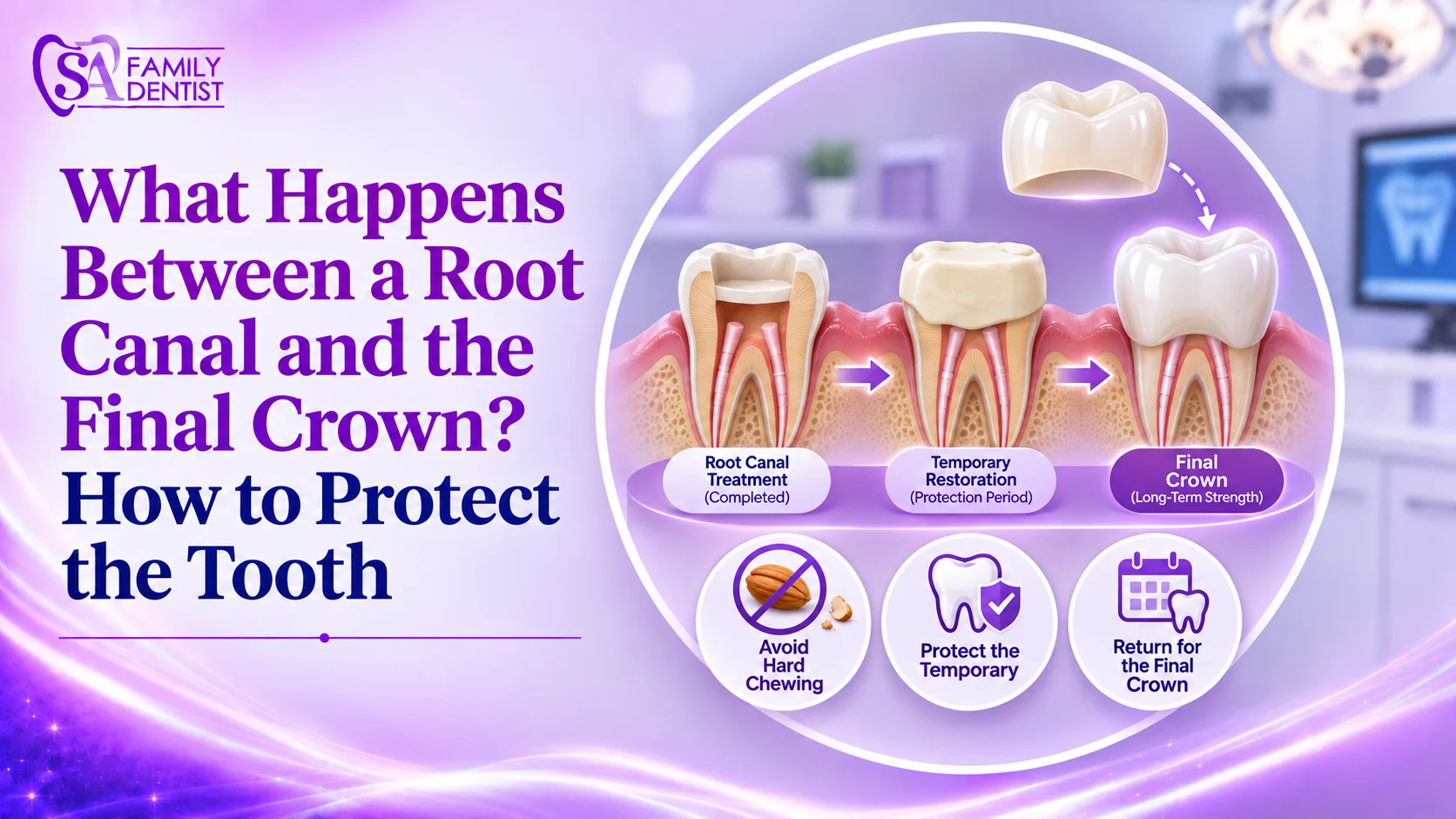
The root canal is complete, the discomfort has started to settle, and you can finally chew without the familiar toothache. It is tempting to assume the difficult part is over.
However, if your dentist has recommended a permanent crown, there is still an important stage of treatment ahead.
A root-canal-treated tooth may have lost considerable natural structure because of decay, fractures or previous dental work. Until the final restoration is fitted, it may be more vulnerable to damage.
Understanding how to protect the tooth during this period can help you avoid complications and preserve the results of your treatment.
Patients searching for the best root canal dentist nearby should also understand why completing the recommended restoration is an important part of long-term dental care.
Why Isn’t the Final Crown Always Placed Immediately?
Root canal treatment and crown placement serve different purposes.
Root canal therapy addresses problems within the tooth’s pulp and root canal system. A crown, when recommended, restores and protects the remaining tooth structure.
Sometimes, both stages can be completed within a relatively short period. In other cases, the dentist may recommend separate appointments.
The timing depends on several factors:
- Remaining tooth structure: Extensively damaged teeth may require additional restorative preparation.
- Clinical condition: Persistent symptoms or infection may influence the treatment sequence.
- Restoration requirements: Some crowns require fabrication before permanent placement.
- Treatment complexity: Certain teeth need additional assessment before the final restoration.
Not every root-canal-treated tooth requires a crown. However, back teeth and heavily restored teeth frequently benefit from protective coverage.
Your dentist will recommend an appropriate restoration based on the tooth’s condition.
What Is Protecting the Tooth During the Waiting Period?
After root canal treatment, the dentist typically seals the access opening to protect the treated canal system.
Depending on the treatment plan, this may involve a temporary filling, a permanent filling or another provisional restoration.
A temporary restoration helps limit contamination while the tooth awaits further treatment.
However, it may not provide the same long-term protection as the final restoration.
If a temporary crown has been placed, it also requires careful handling because it may be less securely retained than a permanent crown.
The important point is that a sealed tooth is not necessarily a fully restored tooth.
The Biggest Risk: Biting Before the Tooth Is Fully Protected
Imagine biting into a hard piece of food and hearing a small crack.
Even when the root canal itself has been completed successfully, the remaining tooth structure may fracture under excessive pressure.
This risk is influenced by how much healthy tooth remains, the location of the tooth and the forces placed on it.
Until your dentist confirms that normal chewing is appropriate, take sensible precautions.
Foods and Habits to Avoid
- Hard nuts, ice and similarly rigid foods.
- Sticky sweets that may dislodge temporary restorations.
- Chewing directly on the treated tooth when advised against it.
- Using your teeth to open packaging.
- Repeatedly testing the tooth by biting down firmly.
Choose softer foods where practical and follow the specific instructions provided after treatment.
If local anaesthesia was used, avoid chewing until normal sensation returns to reduce the risk of accidentally biting your cheek or tongue.
What Is Normal After a Root Canal, and What Isn’t?
Mild tenderness around the treated tooth can occur for a few days, particularly when the surrounding tissues were inflamed before treatment.
Some patients notice sensitivity when biting, even though the infected or inflamed pulp has been removed.
The discomfort should generally improve rather than become progressively worse.
Contact your dentist if you notice:
- Increasing pain instead of gradual improvement.
- Swelling around the tooth or gums.
- A temporary filling or crown becoming loose.
- A noticeable crack or broken section of tooth.
- A bite that feels unusually high or uncomfortable.
Severe swelling accompanied by difficulty breathing or swallowing requires immediate emergency medical attention.
When looking for the best root canal dentist nearby, consider whether the practice provides clear aftercare guidance and appropriate follow-up assessment.
What If Your Temporary Filling Falls Out?
A missing temporary restoration should not be ignored simply because the tooth no longer hurts.
The opening may allow bacteria and food debris to enter, potentially compromising the seal.
Contact your dental practice promptly for advice.
Until the tooth is assessed:
- Avoid chewing on the affected side.
- Keep the area clean through gentle brushing.
- Do not attempt to seal the opening using household materials.
- Follow your dentist’s instructions regarding further treatment.
Do not assume that the absence of pain means the tooth is adequately protected.
Why Delaying the Permanent Crown Can Create Problems
A recommended crown is not merely a cosmetic finishing touch.
It may help protect weakened tooth structure, restore chewing function and provide an appropriate long-term seal.
Delaying the final restoration can leave the tooth vulnerable to fractures, restoration failure or bacterial contamination.
The acceptable waiting period varies between patients, so there is no universal deadline that applies to every root canal.
If you cannot attend your scheduled crown appointment, contact your dentist to discuss the safest next steps.
Complete Your Tooth Restoration With SA Family Dentist
At SA Family Dentist, we understand that patients often have questions about what happens after root canal treatment.
We provide root canal therapy and restorative dentistry for patients across San Antonio. Our team can assess the condition of your treated tooth, discuss appropriate restoration options and explain how to care for it between appointments.
Whether you are preparing for root canal treatment or need guidance about an existing temporary restoration, our focus is on helping you understand the complete treatment process.
If you are searching for the best root canal dentist nearby, contact SA Family Dentist to arrange a consultation and discuss your dental concerns.
Protecting your tooth between appointments is an important part of preserving your oral health.
Frequently Asked Questions
1. Can I eat normally after a root canal but before the crown?
You may need to avoid hard or sticky foods and chewing directly on the treated tooth until your dentist confirms it is adequately protected.
2. How long can I wait before getting my permanent crown?
The appropriate timing depends on the tooth’s condition and treatment plan. Follow your dentist’s recommended schedule rather than delaying unnecessarily.
3. Is it normal for a root-canal-treated tooth to feel tender?
Mild tenderness can occur temporarily. Increasing pain, swelling or persistent discomfort requires professional assessment.
4. What happens if my temporary filling breaks?
Contact your dentist promptly. A damaged restoration may compromise the seal protecting the treated tooth.
5. Where can I get advice about protecting my tooth after a root canal?
Patients searching for the best root canal dentist nearby can contact SA Family Dentist for an assessment and guidance on root canal aftercare and restorative treatment.