
A patient once described his loose tooth as “barely noticeable, doesn’t even hurt” right up until the moment we told him the bone underneath had already started to recede. No pain. No real warning. Just a slow problem that had been building for months while everything felt fine on the surface. People searching for a dentist in San Antonio nearby usually start that search the day something finally hurts, but by then, the problem has often had a long head start.
Pain is the body’s last alarm, not its first one. A lot of serious dental issues skip the pain phase entirely, at least at first. Here’s what actually deserves urgency, whether or not anything aches.
Bleeding Gums That You’ve Started To Ignore
Pink in the sink after brushing gets written off constantly, too much force, a new toothbrush, whatever. Occasional bleeding from brushing too hard isn’t usually an emergency.
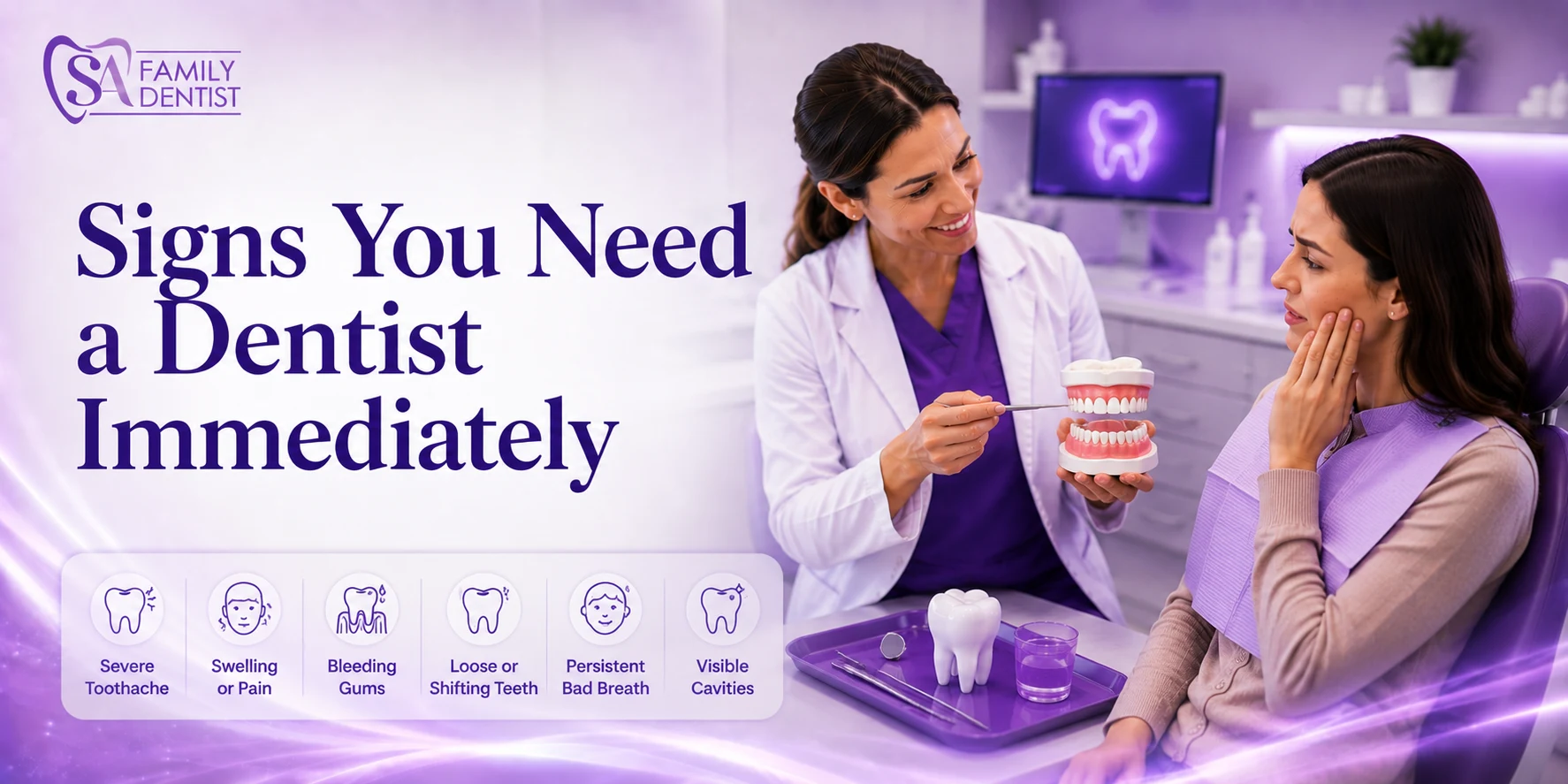
But bleeding that shows up consistently, without an obvious cause, is different. That’s typically a sign of gum inflammation that’s already underway, not something that’s about to start. Left alone, it can progress quietly toward bone loss around the teeth, and none of that stage involves pain.
A Tooth That Feels Loose, Even Slightly
Adult teeth aren’t supposed to move. Any looseness, even something subtle you only notice when pressing on it with your tongue, is worth getting checked rather than monitored.
- Could signal gum disease affecting the bone underneath
- Could indicate an old filling or crown failing structurally
- Could point to a crack that hasn’t fully announced itself yet
None of these get better by waiting. All of them get more expensive to fix the longer they sit.
Persistent Bad Breath That Brushing Doesn’t Fix
Everyone has off days. But breath that stays off no matter how much you brush, floss, or rinse usually has a source, and it’s rarely just “what you ate.” Bacterial buildup below the gumline, an infection, or decay tucked between teeth can all produce a smell that toothpaste simply can’t mask.
Why This One Gets Missed So Often
People treat persistent bad breath as embarrassing rather than medical, so they reach for mints instead of an appointment. That’s backwards. It’s one of the more reliable early signals that something underneath needs attention.
Jaw Clicking, Popping, Or Stiffness
A clicking jaw on its own isn’t automatically a crisis, plenty of people live with it for years without major issues. But clicking that comes with stiffness, difficulty opening fully, or soreness that spreads toward the ears can point to a joint problem that gets harder to manage the longer it’s left unaddressed.
A Small Chip You’ve Decided To “Deal With Later”
Chips rarely hurt right away, which is exactly why they get ignored. A rough edge, a slightly uneven bite, easy to live with for a while.
The risk isn’t the chip itself. It’s what happens around it: a sharp edge can irritate the tongue or cheek repeatedly, and a structurally weak spot can crack further under normal chewing pressure without warning.
Sensitivity That Comes And Goes Unpredictably
Occasional sensitivity to cold isn’t unusual. Sensitivity that shows up randomly, disappears for a while, then comes back, often points to something developing beneath the surface, like early decay near a nerve. The on-and-off pattern can feel reassuring. It shouldn’t be.
Conclusion
Here’s the pattern across all of this: the absence of pain doesn’t mean absence of a problem. Most of what causes real dental damage develops slowly and quietly, well before anything hurts enough to demand attention.
If any of the above sounds familiar, searching for a dentist in San Antonio nearby is worth doing today rather than after symptoms get louder. Catching things early is almost always simpler, faster, and cheaper than waiting for the alarm bell.
At SA Family Dentist, we’d rather see you for the small stuff than the emergency it could become. Our team across San Antonio is set up to take a quick look at exactly the kind of thing people usually wait on. If something on this list sounds familiar, find a location near you and get it checked before it gets louder.
Book a dental check-up today and make sure everything is truly okay, even if nothing hurts.
FAQs
1. Can I have a serious dental problem even if I don’t feel any pain?
Yes. Many dental conditions, including gum disease, tooth decay, and infections, can develop without causing pain in their early stages. Regular dental check-ups help detect these issues before they become more serious.
2. Should I be concerned if my gums bleed when I brush my teeth?
Occasional bleeding from brushing too aggressively may not be serious, but persistent bleeding can be an early sign of gum disease and should be evaluated by a dentist.
3. Is a loose adult tooth considered a dental emergency?
A loose adult tooth should always be assessed promptly. It may indicate gum disease, bone loss, trauma, or another underlying condition that requires professional treatment.
4. Why do I have bad breath even though I brush and floss regularly?
Persistent bad breath may be linked to gum disease, tooth decay, infection, or bacteria trapped below the gumline. If it doesn’t improve with good oral hygiene, a dental examination is recommended.
5. When should I see a dentist for tooth sensitivity?
If sensitivity becomes frequent, unpredictable, or worsens over time, it’s a good idea to schedule a dental visit. It may be a sign of enamel wear, decay, a cracked tooth, or another issue that needs attention.