
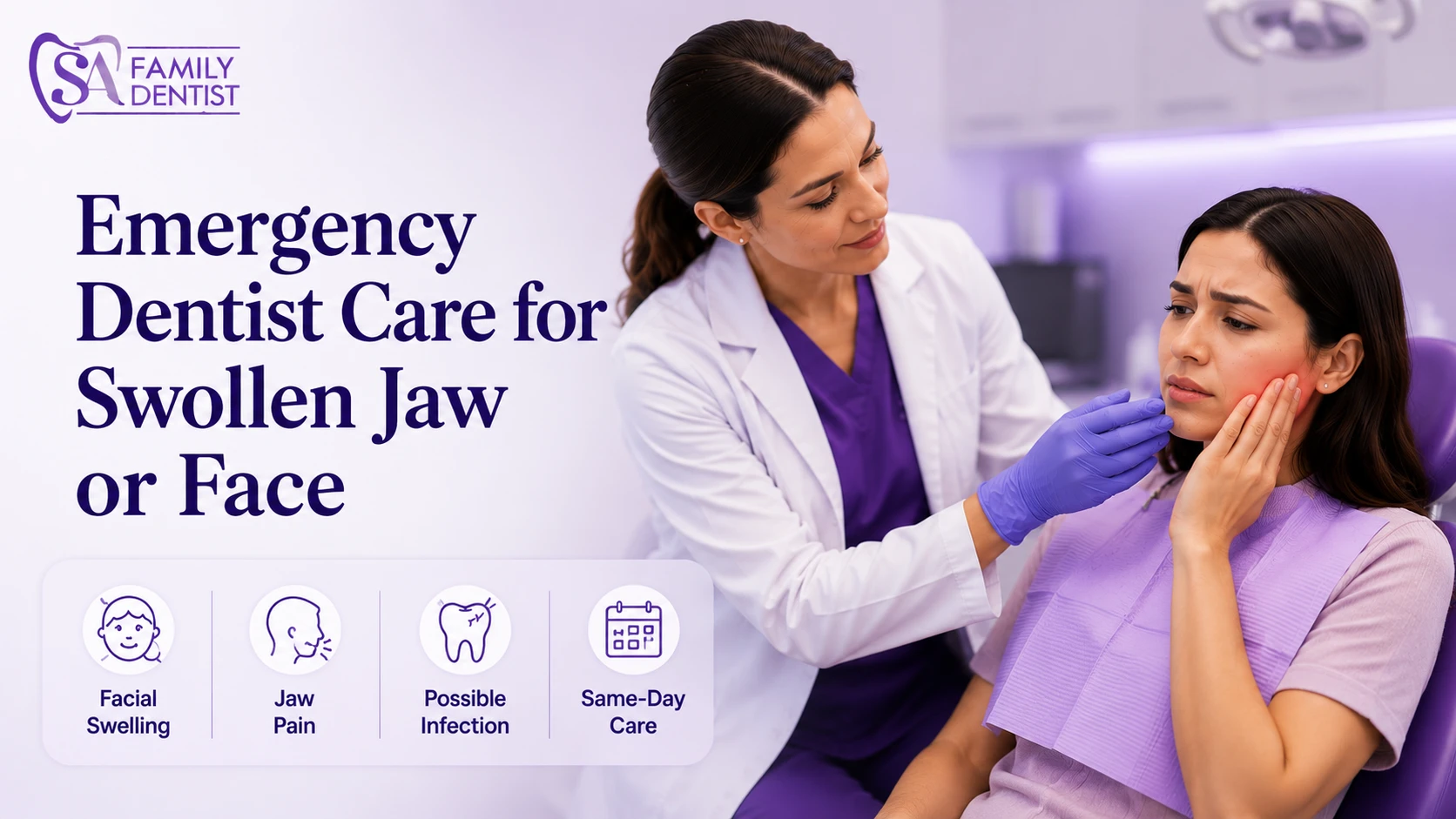
A man once showed up describing his jaw swelling as “probably just from clenching.” It wasn’t. By the time he came in, the swelling had moved down toward his neck, and what started as a small infected tooth had turned into something requiring urgent attention that day, not “whenever it’s convenient.”
That’s the gap people fall into with facial swelling, it often starts small enough to dismiss, then changes fast enough that a quick search for 24-hour emergency dentist suddenly feels less like overreacting and more like exactly the right move.
Here’s how to actually tell the difference, stage by stage.
Mild Swelling That’s Still Manageable
Some swelling from a tooth issue is uncomfortable but not alarming yet. A small amount of puffiness along the gum line near one tooth. Slight tenderness when you press on the cheek near the affected area. No fever, no spreading, nothing changing hour to hour.
This stage is worth addressing soon, ideally within a day or two, but it’s not a 2am emergency. Rinsing with warm salt water and avoiding chewing on that side can help in the short term while you get an appointment scheduled.
Moderate Swelling, The Stage That Needs Same-Day Care
This is where things shift. The cheek visibly puffs out, noticeably more than just tenderness. The swelling is spreading rather than staying contained to one small area. There’s a low fever. Pain has gotten sharper, not milder, over the past day.
At this stage, calling an emergency dentist the same day matters. The infection driving this swelling is active, and active infections in the face don’t tend to slow down on their own.
A few specific signs that put you firmly in this category:
- Swelling that’s gotten visibly worse in the past 12 to 24 hours
- A fever that’s developed alongside the swelling
- Pain that wakes you up at night or won’t respond to over-the-counter medication
- Swelling near the eye or extending toward the neck
Why “It’s Not That Bad Yet” Is A Risky Read
Swelling from a dental infection rarely peaks and stops on its own. It tends to follow the path of least resistance through facial tissue, which means it can move from a small area near one tooth to somewhere more concerning within a day, sometimes faster. Waiting to “see how it looks tomorrow” is exactly the gamble that turns a manageable infection into a harder one.
Severe Swelling: This Is Genuinely Dangerous
A small number of cases cross into territory that needs immediate medical attention, not just a dental visit. If swelling is making it hard to swallow, hard to breathe, or is closing one eye, or if there’s swelling under the jaw extending into the neck along with a high fever, that’s an emergency room situation, not a “wait for the dentist” situation. Infections that reach this stage can affect the airway, and that’s not something to manage by waiting for office hours.
If you’re unsure which category you’re in, calling and describing exactly what you’re seeing, where the swelling is, whether it’s spreading, whether there’s a fever, helps sort out quickly whether this is same-day dental care or something requiring the ER first.
Conclusion
Don’t apply heat to facial swelling. It can encourage an infection to spread rather than contain it. Cold compresses are generally safer for managing discomfort while you get seen. And don’t wait through a night hoping it improves once swelling has clearly started progressing.
At SA Family Dentist, facial swelling from a tooth is exactly the kind of situation our emergency dentistry service is built to handle quickly. Our San Antonio team will tell you honestly if this needs an ER instead of an office visit, because that distinction matters more than convenience.
Call your nearest location right now if this sounds like what you’re dealing with.
FAQs
1. Is facial swelling from a tooth infection an emergency?
Facial swelling can be a sign of a dental infection and should never be ignored. If the swelling is spreading, worsening quickly, or accompanied by fever, it may require same-day dental care.
2. When should I go to the emergency room for tooth-related swelling?
Seek immediate medical attention if the swelling is causing difficulty breathing, difficulty swallowing, severe fever, or is spreading into the neck or around the eyes. These symptoms may indicate a serious infection.
3. What can I do at home while waiting to see a dentist?
You can apply a cold compress to help reduce discomfort and avoid chewing on the affected side. Warm saltwater rinses may also help keep the area clean. However, professional treatment is still necessary to address the underlying cause.
4. Should I use heat on a swollen jaw or face?
No. Applying heat to facial swelling caused by a dental infection may encourage the infection to spread. A cold compress is generally the safer option until you receive professional care.
5. Can a swollen face from a tooth infection go away on its own?
In most cases, the underlying infection will not resolve without treatment. Delaying care can allow the infection to worsen, potentially leading to more serious complications and a more complex treatment process.