
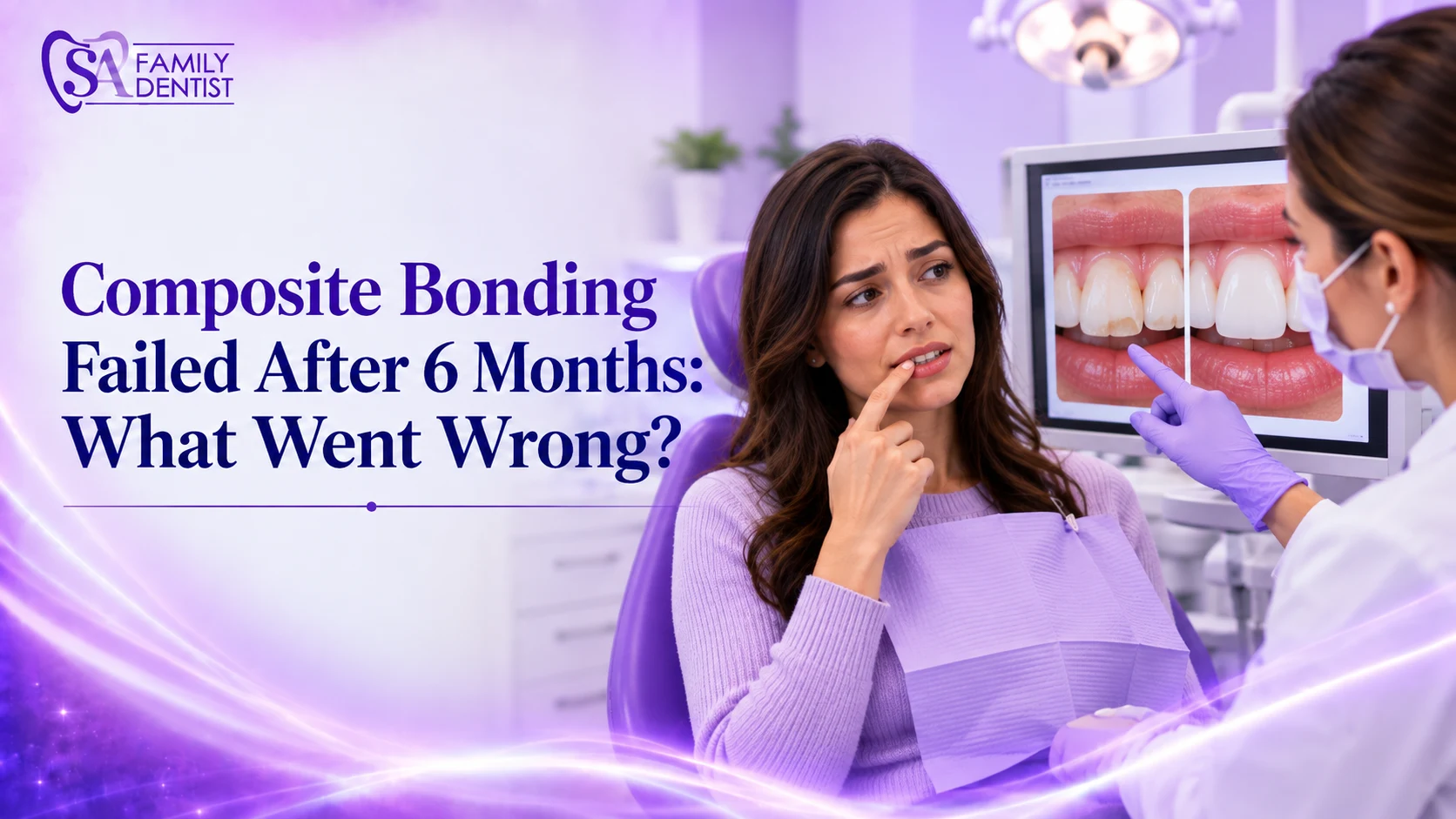
Composite bonding is not supposed to fail within a few months under normal circumstances, so a chip, crack, stain or detached piece after six months deserves attention. The cause, however, is not always the bonding procedure itself. Before searching for the best cosmetic dentist in San Antonio, TX, it helps to understand what can shorten the life of a bonded tooth and whether the underlying problem can be corrected.
First, What Does “Failed” Actually Mean?
Patients can use the word “failed” to describe several different problems.
Your bonding may have:
- Chipped along an edge
- Partially broken away
- Completely detached
- Become noticeably stained
- Developed a rough surface
- Started feeling different when you bite
These problems do not necessarily have the same cause. A dentist needs to examine both the bonded area and the tooth before deciding whether it should be polished, repaired, replaced or treated differently.
The Bonding May Be Taking Too Much Bite Pressure
One of the first things worth checking is your bite.
Composite resin needs to function alongside your natural teeth. If the bonded area receives excessive pressure whenever you bite or chew, repeated force may eventually cause it to chip or break.
This can be particularly relevant when bonding has been used along the biting edges of front teeth.
A restoration can look excellent immediately after treatment but still encounter problems later if the forces placed on it are greater than it can reliably handle.
Grinding and Clenching Can Put Bonding Under Stress
Do you wake up with a tired jaw? Have you been told that you grind your teeth?
Bruxism, which includes grinding or clenching, can place considerable repeated pressure on teeth and dental restorations. Because it may happen during sleep, some patients do not know they are doing it.
Possible clues include:
- Flattened or worn tooth edges
- Morning jaw discomfort
- Chipped natural teeth
- Repeated damage to restorations
- Tooth sensitivity in some cases
If bonding keeps breaking, repairing the same spot without investigating why it is under stress may simply repeat the problem.
What You Bite Matters Too
Composite bonding is designed for normal everyday function, but it is not indestructible.
Biting fingernails, chewing ice or using your teeth to open packaging can place unnecessary force on bonded areas. Very hard foods can also cause damage, particularly when they are bitten directly with a bonded front tooth.
If you are consulting the best cosmetic dentist in San Antonio, TX after an early bonding problem, be honest about these habits. They may provide an important clue about what happened.
The objective is not to assign blame. It is to understand the reason for failure so the next treatment has a better chance of lasting.
Sometimes the Original Tooth Needed a Different Solution
Composite bonding is useful for many minor cosmetic concerns, but it has limits.
The amount and location of missing tooth structure matter. A small chip may be suitable for bonding, while more extensive damage could require a different restorative approach.
This is why treatment selection matters as much as treatment technique.
Before replacing failed bonding, a dentist should consider questions such as:
- How much natural tooth remains?
- Where exactly did the bonding break?
- Is the tooth receiving heavy biting pressure?
- Is there an underlying dental problem?
- Has the same restoration failed before?
Repeatedly adding composite without answering these questions may not address the real issue.
Staining Is Different From Structural Failure
Not every change after six months means your bonding has physically failed.
Composite resin can pick up surface staining over time. Coffee, tea, tobacco and other strongly colored substances may contribute to changes in appearance.
Unlike natural enamel, composite material does not respond to whitening treatment in the same way. This becomes particularly important if you whiten your natural teeth after bonding, because the surrounding teeth may change shade while the existing composite does not.
A dentist can determine whether the issue is superficial staining or whether the restoration itself requires attention.
Could Oral Health Be Part of the Problem?
Cosmetic dentistry should not be separated from general oral health.
Decay, gum problems or changes affecting the tooth underneath or around a restoration may influence treatment decisions. Before repairing failed bonding, the dentist should evaluate the health of the tooth rather than focusing only on how the restoration looks.
That is also why choosing the best cosmetic dentist in San Antonio, TX for your needs should involve more than comparing before-and-after photos. Cosmetic treatment needs to function well as part of a healthy mouth.
What Should You Do If Your Bonding Breaks?
Do not try to glue a broken piece back yourself or ignore a sharp edge.
Arrange a dental examination, especially if the tooth is painful or sensitive. Until it is assessed, avoid biting hard foods directly with the affected tooth and keep the area clean.
Most importantly, find out why the bonding failed before simply having it replaced.
Fix the Cause, Not Just the Composite
Bonding that fails after only six months is worth investigating. Bite pressure, grinding, habits, the condition of the original tooth and whether bonding was the right treatment can all matter.
SA Family Dentist provides cosmetic and restorative dental care in San Antonio. If your bonding has chipped, changed or broken, the team can examine the tooth, identify possible contributing factors and discuss appropriate treatment options.
SA Family Dentist also has convenient locations in Braun, Nacogdoches, and Jackson Keller, making it easy to choose the office nearest to you for personalized dental implant care.
Frequently Asked Questions
1. Is it normal for composite bonding to break after six months?
Early breakage is not something to ignore. A dentist should assess the restoration and look for factors such as excessive force, grinding or problems with the underlying tooth.
2. Can broken composite bonding be repaired?
In some situations, yes. Whether repair or replacement is appropriate depends on the extent of the damage and the condition of the tooth.
3. Can teeth grinding damage composite bonding?
Yes. Repeated grinding or clenching can place additional stress on bonded teeth and may contribute to chipping or breakage.
4. Why has my bonding changed color?
Composite can develop surface staining over time. Diet, tobacco use and differences between composite and natural enamel can affect its appearance.
5. Should I replace bonding immediately if a piece chips off?
Have the tooth examined rather than deciding on replacement yourself. The dentist can determine what caused the damage and whether repair, replacement or another treatment is appropriate.